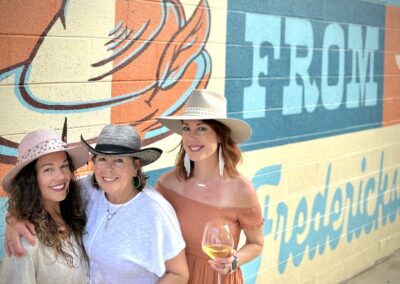

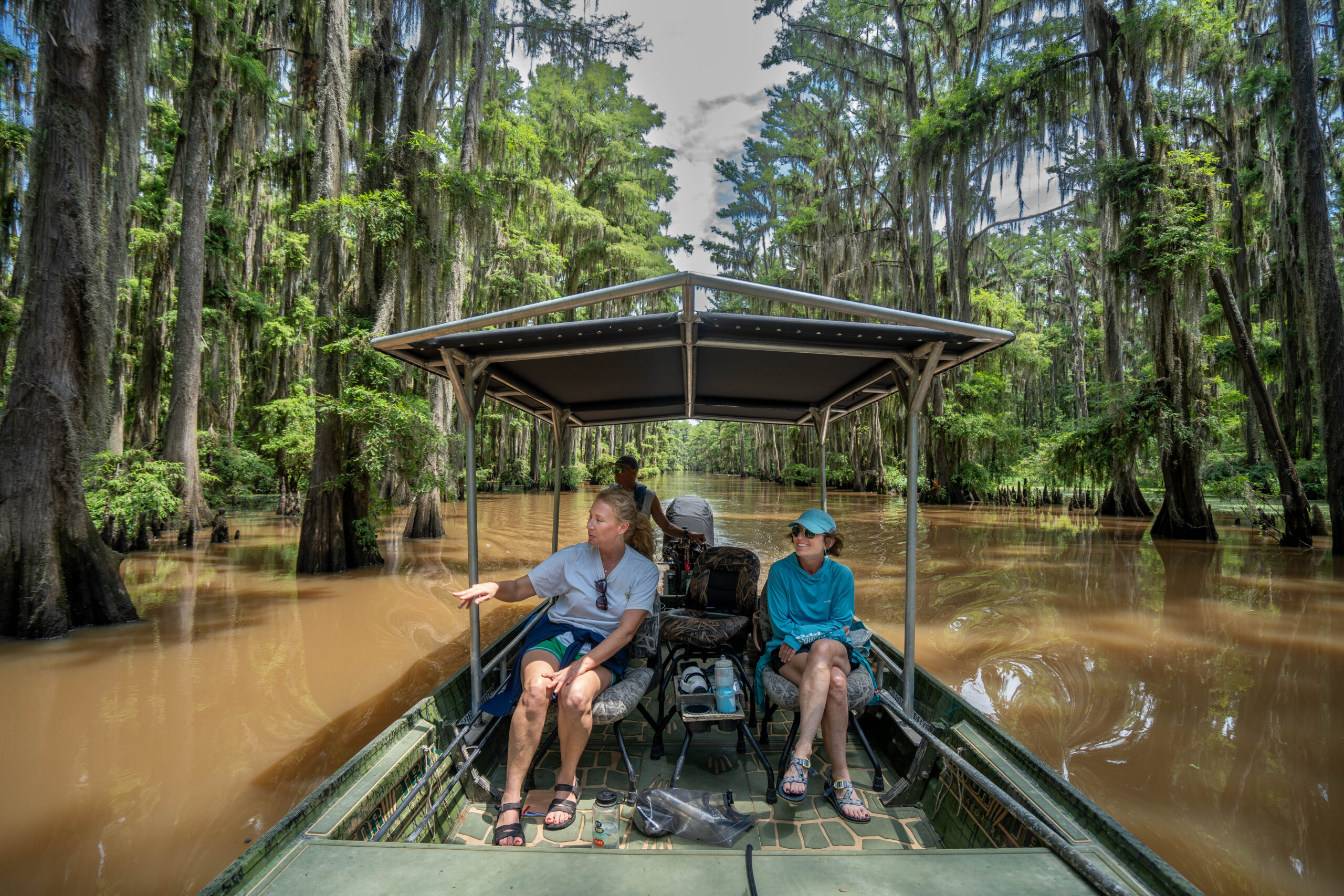
Laura-Ashley Overdyke and Marcy Stellfox enjoy a boat ride on Caddo Lake with Danny Sullivan. Pam LeBlanc photo
Caddo Lake holds all kinds of mysteries, and I’m getting a close-up look at many of them from a seat on a flat bottom boat driven by Captain Danny Sullivan.
We’ve just wheeled around a bend when Sullivan lets the boat glide to a stop in front of a gap in the green-gray curtain of trees. This is Government Ditch, a mile-long channel cut through the swamp by the U.S. Army Corps of Engineers in the 1870s. The passage served as a shortcut for steamboats carrying passengers, cotton and other goods headed to nearby Jefferson, then the largest inland port in the nation.
Sullivan gives the boat a short burst of gas, and we putter down the watery road, which is lined with cypress draped in Spanish moss. A gleaming white great egret, standing on toothpick-like legs, struts along a fallen log looking for fish. A flotilla of turtles plops off a log and into the water.
A lake with a history
Caddo Lake straddles the Texas-Louisiana border about 200 miles east of Dallas. The lake and its surrounding wetlands cover more than 26,000 acres, an intricate web of bayous, ponds and swamps. It’s known as the only natural non-oxbow lake in Texas, although that’s stretching the truth a bit. A few smaller, naturally formed lakes do exist here, although most are man-made reservoirs.
Read more: From waterfall to a remote national park, Michigan’s Upper Peninsula serves up adventure
But this one’s got history. It materialized around 1800, when a massive log jam known as the Great Raft formed along the Red River. Uprooted trees and debris stretched for about 100 miles, backing up water and creating a vast wetlands area.
A steamboat captain named Henry Miller Shreve is credited with breaking up the logjam starting in the 1830s. The Army Corps of Engineers finished the job using explosives in 1871, creating the “hallway” I’m now looking at.
A watery tour of Caddo Lake
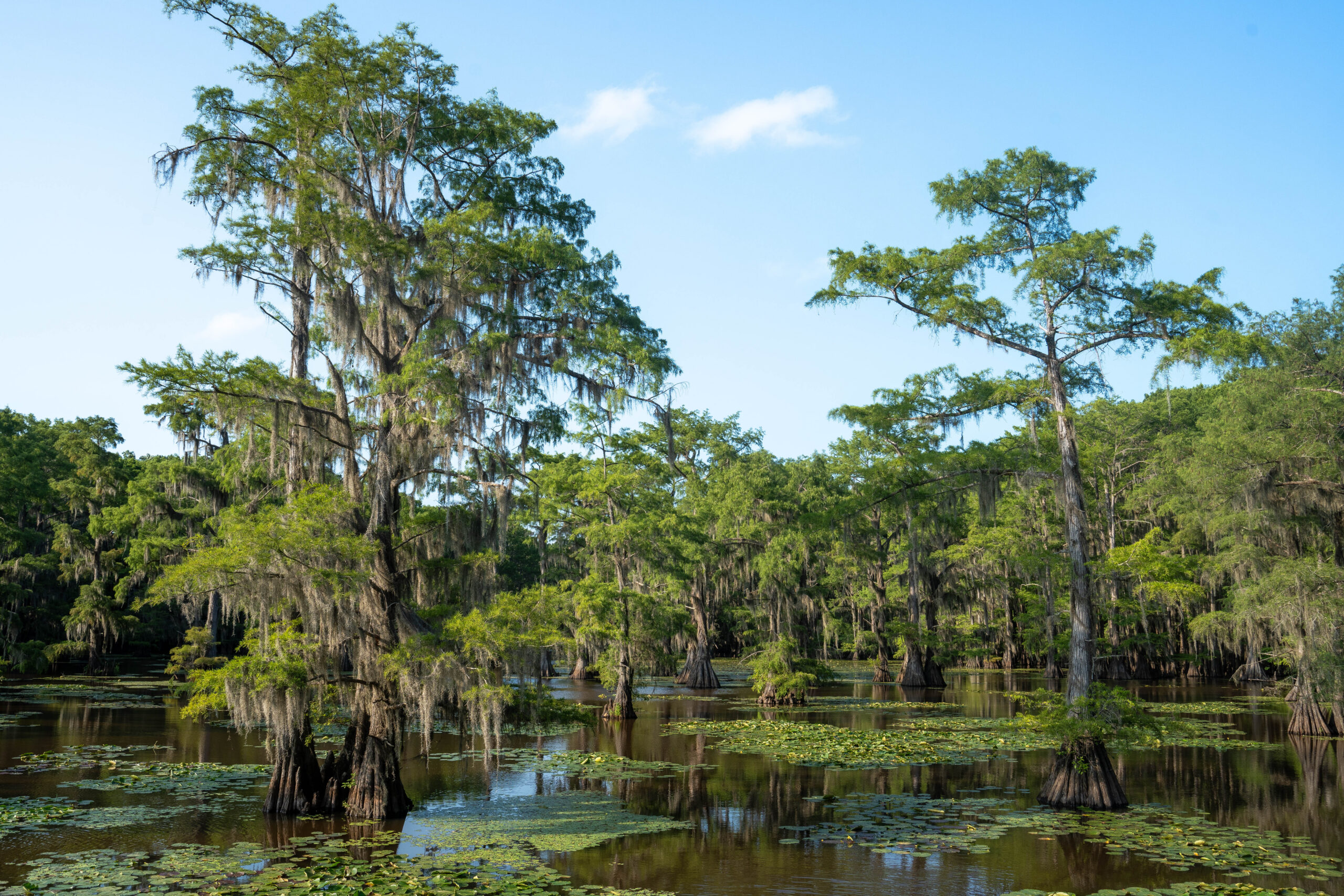
Cypress grow in a Saw Mill Pond on Big Cypress Bayou at Caddo Lake State Park. Pam LeBlanc photo
It’s just one highlight of my trip to Caddo Lake.
Sullivan guides us past a beaver dam tucked in a cluster of trees. Later we motor past a big cypress where an osprey has built its nest. We watch an adult and a fuzzy chick peer down at us.
Alligators live in these waters, too, but they’re not coming out today – maybe because of the noisy mudboat races that took place a few days ago. So do snapping turtles and paddlefish, a prehistoric-looking species with a broad, flat snout that Texas Parks and Wildlife is working to reintroduce.
“There’s a primordial feeling here,” says Laura-Ashley Overdyke, executive director of the Caddo Lake Institute, which formed 33 years ago to fight a proposal to dredge a ship channel through the lake. Today the organization works to protect the fragile habitat from other threats, both man-made and natural, like the invasive giant salvinia that’s spreading across its surface.
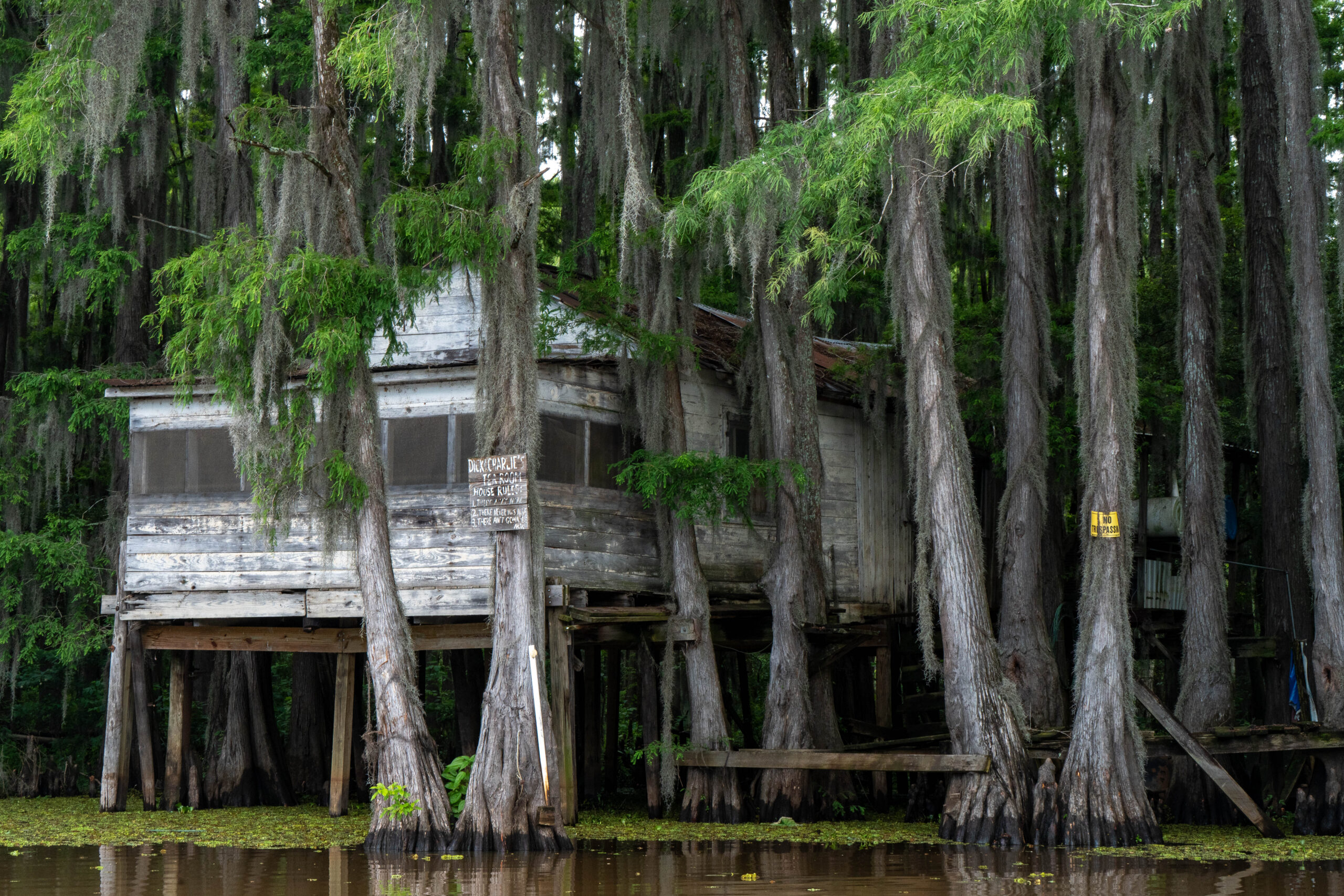
According to legend, Dick & Charlie’s Tearoom once operated as a brothel or speakeasy. Pam LeBlanc photo
We stop to look at a rickety cabin on stilts known as Dick & Charlie’s Tearoom. It’s not a tearoom at all, but legend says it once operated as a speakeasy or a brothel. You can only access it by boat, and a sign nailed to a tree out front explains the rules: “1. There ain’t any. 2. There never was none. 3. There ain’t gonna be none.”
We spend the next few hours poling through a densely treed area dubbed The Cathedral, embraced by branches and serenaded by tree frogs, and coasting down another passage cut through the lily pads. In one alcove, we watch a pair of barred owls peer down at us.
“It’s teeming with life,” says Overdyke says. “There are so many layers – open lake, swamp, bayou and bottomland forest – and each has its own unique habitat. It’s just one of those mysterious, unusual, mystical places.”
Read more: Eight beginner-friendly places to paddle in Central Texas
An Uncertain destination
The boat tour is just part of my two-night trip to Caddo Lake. The nearest community is Uncertain, a ramshackle collection of cabins, homes and boat docks.
No one knows for sure how Uncertain got its name, but theories abound. Some say it came from a map that steamboat captains used to see where they could safely navigate. Mapmakers weren’t sure if the area was navigable, so they labeled it “uncertain.” Others say the town got its name before the official state border line with Louisiana was drawn. Residents weren’t sure if they lived in Louisiana or Texas, a convenient misunderstanding when it came to paying taxes. And another theory suggests that when applying for official township, town leaders couldn’t decide on a name and wrote “uncertain” on the paperwork. It stuck.
Regardless of the origin of its name, the community prides itself on its quirkiness. An old Volkswagen bug, adorned with ceramic frogs, stands in one yard, part of a collection of Volkswagen sculptures made by local artist Dottie Carter, who died in 2025. A wooden sign in another yard depicts Bigfoot, who may or may not roam these woods. Johnson’s Ranch Marina is the oldest operating inland marina in the state, and it sells bait, offers boat tours and rents canoes and kayaks.
An old ammunition plant near Caddo Lake
Not far from town lie the footprints of another mysterious old place. Longhorn Army Ammunition Plant made TNT and other explosives during World War II and later manufactured solid fuel rocket motors. During the 1960s, nearly 3,000 people worked at the plant, which was eventually decommissioned and demolished. Today the land is part of a federal wildlife refuge, with a few trails where visitors can wander or watch birds.
I’m camping at Caddo Lake State Park, located on Big Cypress Bayou, 4 miles upstream of the main lake. Lady Bird Johnson’s father, T. J. Taylor, donated some of the land that now makes up the park, which opened in 1934.
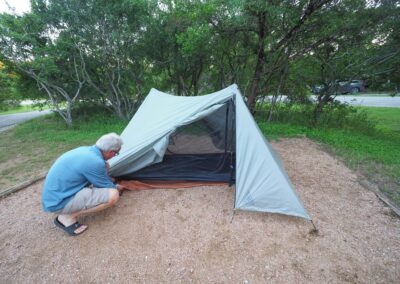
I’ve pulled my campervan into a slot on the Armadillo Run loop. It’s shaded, but I can hear the buzz of passing trucks. (The Old Mill Pond loop is quieter but doesn’t have electric hookups.)
It’s a short walk down a hill to Saw Mill Pond, where I walk out on a wooden pier to admire the surrounding swamp. A bright yellow bird called a Prothonotary warbler perches on the knobby knees of a bald cypress. Tree frogs chirp in the background and the sun filters through the dense canopy.
It feels peaceful – and ancient. And unlike any other place in Texas.
If You Go

Getting there:
It takes about five hours to drive to Caddo Lake State Park from Austin. It’s located at 245 Park Road 2 near Uncertain and Karnack.

Stay:
Camp or stay in a cabin or screened shelter at the park. Park entrance is $4 for adults or free for children 12 and under. Campsites range from $10 to $25.

Do:
Camp, fish, paddle, hike or visit nearby Jefferson, once the largest inland port in Texas. Take a boat tour.

Eat & Drink
Try the Caddo Outpost in Karnack for huge breakfast tacos. Big Pines Lodge, established in the 1950s, serves fried catfish, fried shrimp, chicken fried steak, burgers and fried alligator bites.
Pro Tip:
Alligators live in the swamp. Stay at least 30 feet away, and do not feed or harass them. They rarely chase humans, but they’re faster than you both in the water and on land. Keep pets away from banks where alligators may be present.