
What’s in Calvert?
Turns out that this tiny city is a packed with the past — and some beginnings.
I was antsy to go on a daylong outing with gal pals to explore one of Central Texas’ nooks and crannies. My focus narrowed in on this small spot in Robertson County.
About two hours northeast of the state Capitol, Calvert gave us a long look back at a time that has waved us goodbye: historic churches, cemeteries, homes, a yesteryear Main Street. And baseball fans won’t be left out either!
I hopped in my Toyota with two friends, loaded with printouts and gusto. The drive was one long sigh of relaxation. Outside Austin, we whirred alongside green fields, cows, cornstalks. Aaaahhh.
A sign welcomed us to this small city, whose population is smaller than my old high school. (The 2020 Census put the number at less than 1,000.)
We arrived on the historic Main Street, aka State Highway 6. It slices through town, with semi-trucks roaring by, as well as small cars chugging along.
We set off immediately on a self-guided walking tour, under shady trees, on a narrow street, but no sidewalk. Fortunately, traffic was light in this neighborhood.
RELATED: 5 fun things to do in Waco, Texas
Using a downloaded map – blessings to the Calvert Historical Foundation website — we started at the bright white Episcopal Church of the Epiphany, a lovely Victorian architecture house of worship, one of many buildings designated with a Recorded Texas Historic Landmark.
Located among the numerous striking houses, the church was organized in 1870 and is the “oldest church edifice erected in Calvert; has been used continuously since parish was founded,” the sign said.
In the hush of a Friday mid-morning, we milled around, as birds chippered, and the looooonng sound of a train in the distance made a nice morning serenade.
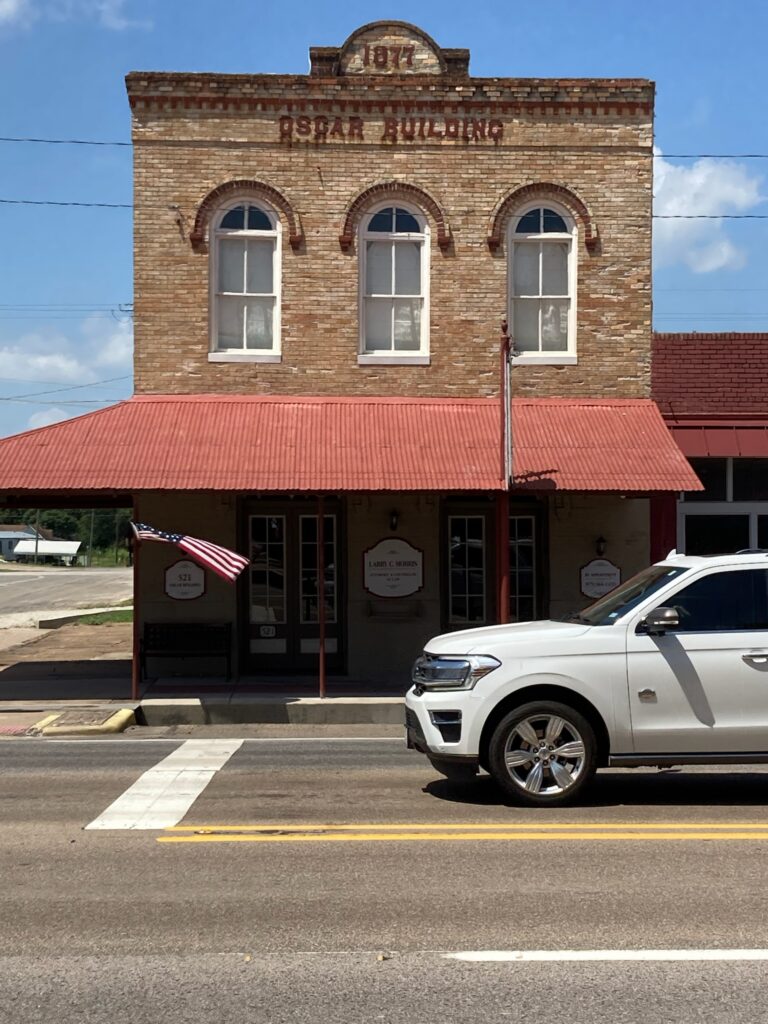
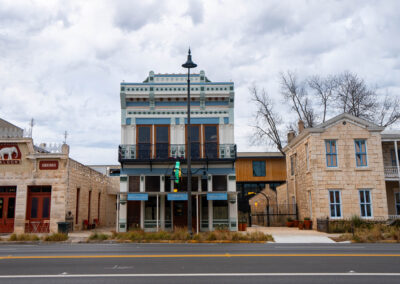
Historic buildings line Main Street in Calvert, Texas. Contributed by Carolyn Lindell
My friends and I must have appeared confused; soon a friendly retiree who lives nearby drove over on his riding lawn mower, like a personal Welcome Wagon, to greet three strangers. That’s hospitality!
We continued meandering around Calvert’s large 37-blocks listed on the National Register of Historic Places, but not catching nearly all the sites. I had to brush up on some architectural terms, such as lancet windows and fish-scale shingling.
A former City Hall building, showing its lost grandeur with long columns out front, emanates an eerie aura of long ago. (City offices moved to Main Street location.)
We wandered around the Calvert Cemetery, reading engraved birth and death dates from the 1800s on gravestones and eyeing some elaborate statues.
“Two big angels in the middle of the cemetery, those were my great-grand aunts,” said Jennifer Caudle, former president of the historical foundation, who is an encyclopedia of the city’s long past. “I’ve got five generations of my family in there.”
While the historic Main Street is an attention-getter, the sites off the thoroughfare also have much to admire.
“Most people are just astonished with what’s hidden back there,” Caudle said. “They say, ‘We had no idea’.”
Last year, the foundation put on a Calvert Holiday Tour of Historic Homes and Churches.
“It was spectacular,” Caudle said, adding that future tour plans are being discussed.
We didn’t see any ghosts, though; she said, sometimes “paranormal” enthusiasts come around town, waiting for phantoms to appear, I suppose.
Of particular interest to them, she said, is the Orviss Vault by the Calvert Jewish Cemetery. “They love to spend the night out there on Halloween.”
Calvert has a deep backstory. Named after Robert Calvert, the city saw the arrival of the railroad in 1869. Boomtimes followed. That brought more people, and the community thrived with a weekly newspaper, opera house, banks, schools, according to the Texas State Historical Association. Cotton was king, queen and everything else.
It also was struck hard by an epidemic of Yellow Fever in 1873, devastating the area with many deaths, as some gravestones will attest.
While the number of residents has dwindled over the decades, the small community shows a strong commitment to keep its story alive.
“It takes dedication, but it’s worth it,” said Caudle. “We just love for people to come visit. We love to tell people about our history.”
My friends and I drove around other parts of town for more finger pointing out the window.
One companion is a big baseball fan, so we endured a few rounds of turning our map upside down and around to find a marker honoring Calvert native Andrew (Rube) Foster (1879-1930). Located by a simple baseball field, Foster’s marker is dense with words about a player whom perhaps many people don’t know about. Foster is dubbed “the father of black baseball.” The sign also lists all kinds of stats and accomplishments, including being elected to the National Baseball Hall of Fame in 1981.
The city has a mix of classic, well-maintained buildings of note, some with bunting and U.S flags out front. Others appear empty, or could perhaps use repairs, a sander and a fresh coat — all part of the mixed montage of the city’s story.
We could have wandered for hours longer, ping-ponging from this notable place to that prominent place — all calling for attention — but our stomachs spoke louder. We hoofed it to Main Street.
The old-time storefronts are a mix of a few vacancies, alongside businesses ready to serve. Antiquers won’t have to go home empty-handed. Signs for “En Gedi Vineyards,” “Calvert Cigar Co.,” restaurants and other places might entice time-travelling visitors back to modern conveniences and luxuries.
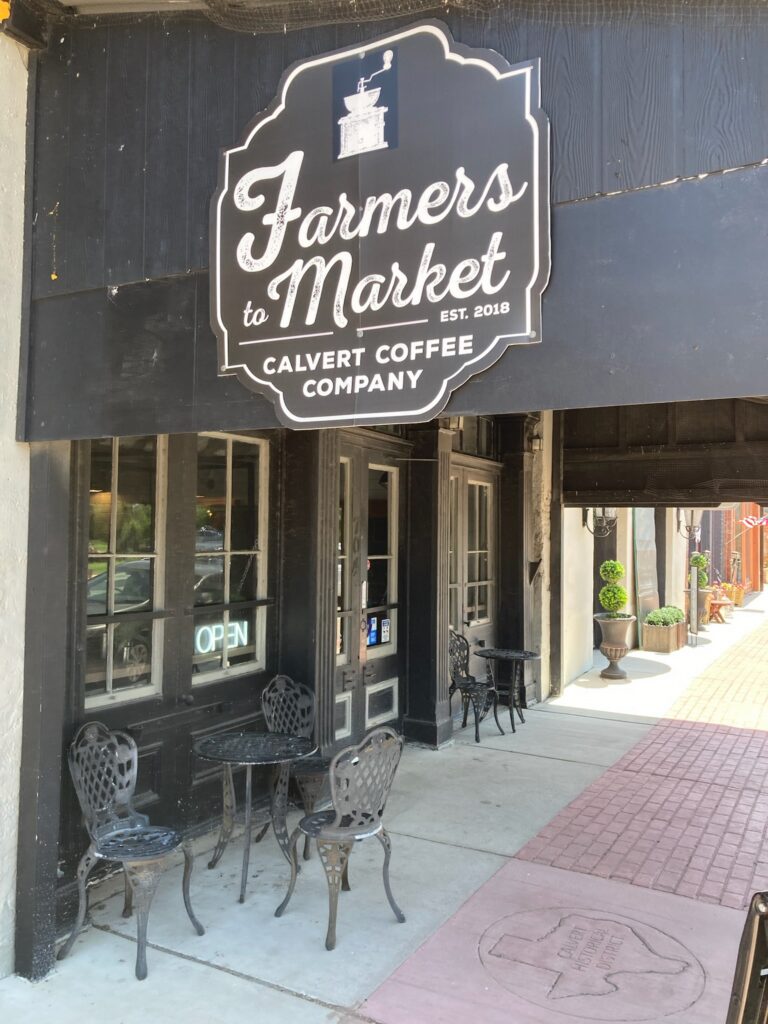
Farmers to Market Calvert Coffee Company has much to offer those who love caffeine and other goodies. Contributed by Carolyn Lindell
The street was hushed, but when I ducked into the Farmers to Market Calvert Coffee Company, I found myself in line behind a half-dozen others, selecting from a menu of espressos, iced latte and more. I bought a bag of coffee beans, thinking I was simply supporting a local business, but when I got home, I discovered the House Decaf out-flavored the brand in my cupboard. Sorry, H.E.B.!
At last, we plunked our purses on the seats at the nearly empty Cowgirls Tavern and gnoshed on chicken strips, grilled cheese sandwich and delicious seasoned fries (with leftovers to reheat at home!). Scrumptious the first and second time around!
Like the many other places that showed civic pride, even the bathroom at the restaurant had a sign hanging, describing the city’s early days of saloons and casino tables.
But this city ain’t overly quaint. We didn’t go home with saccharine coursing our veins, and some areas showed a less-than-lavish side.
We had a grand time for the better part of a day, though true history hounds would not be bored if they turned their trip into an overnighter. We spotted the Pin Oak Bed and Breakfast. Its expansive grounds sit among the shade of large trees, with long branches that reach up high and low to the ground.
To pile on your to-do list of history to unfold, a short segment of the original Camino Real route winds through Calvert; also some area building designs came from mail-order catalogs of noted architect George F. Barber.
RELATED: Healing and gratitude in Pagosa Springs, Colorado
That should get any holdouts running for their car keys to get their wheels rolling thisaway.
The route back home also offers options. Near Hearne – several miles away – is the location of a former World War II Prisoner-of-War Camp (camphearne.com). However, we had filled our day, and we didn’t have the fortitude for that. Instead, we headed to a Dairy Queen, which is required for this trio after many hours adventuring.
The drive took barely a half-tank of gas roundtrip in my Toyo. We got to enjoy many sights, despite summer heat, and we were greeted with history and hospitality everywhere.
The foundation’s website, https://historiccalvert.org/, has plenty of information with photos, links to historical markers, as well as maps for self-guided tours to homes, churches and cemeteries. Those people really know how to put together an easy-to-use online guide! Information about reserving tours can be found online as well.
Calvert perhaps is not as well-known as other Texas attractions, but could satisfy that yen for unbeaten pathways. It would appeal to those who enjoy an excursion to a quiet city with a loud story to tell.
And be sure to wave if you see a guy on a riding lawn mower!