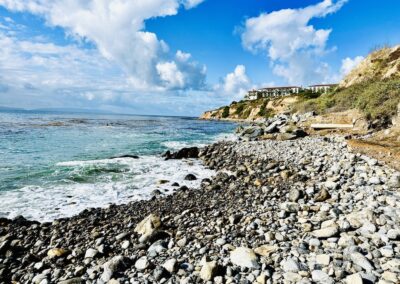

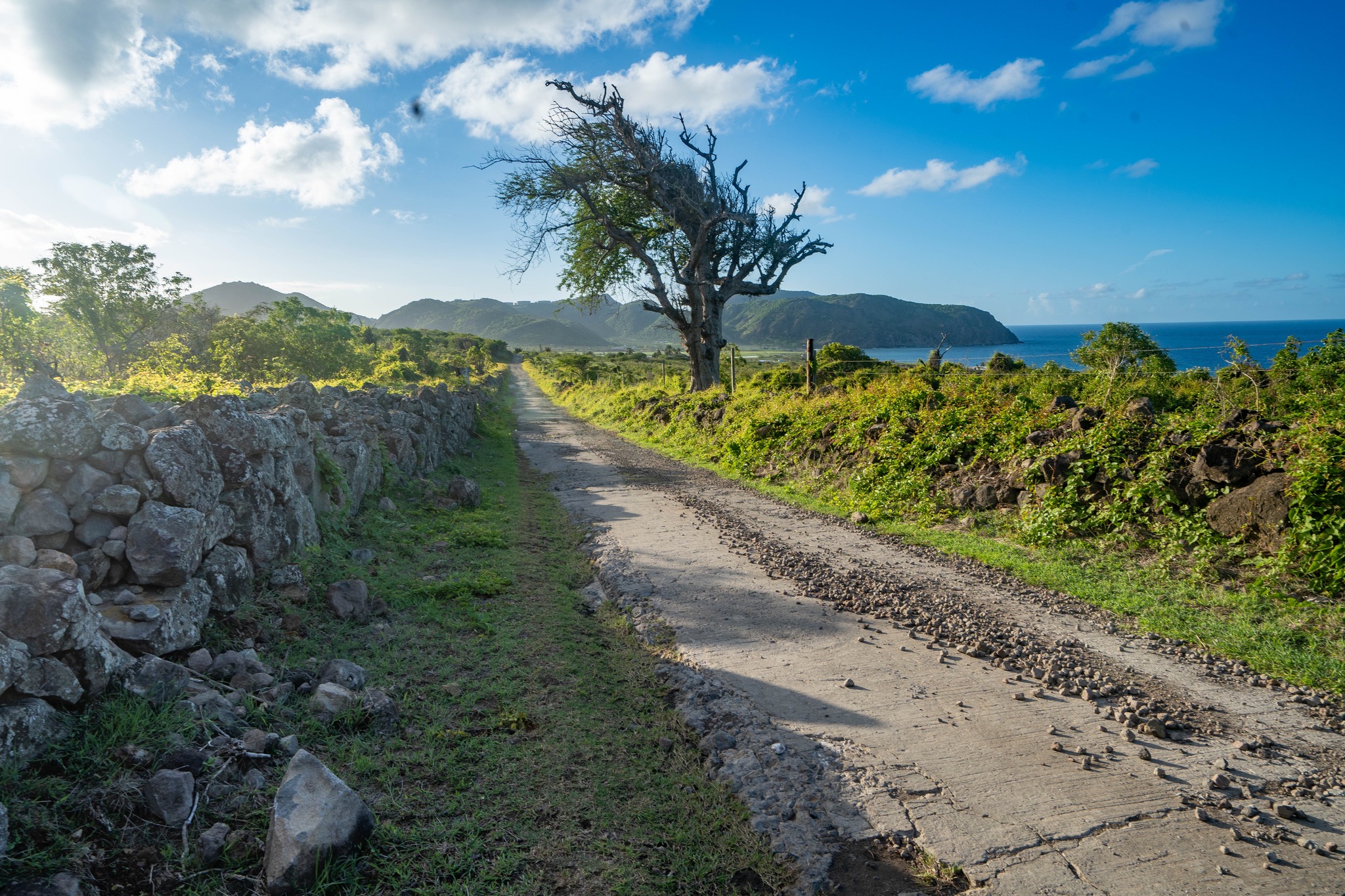
Roads on Sint Eustatius are lined with rock walls built by enslaved people. Pam LeBlanc photo
By Pam LeBlanc
No traffic lights. No cruise ships. No hordes of people.
And, next fall, one more reason to visit the Dutch island of Sint Eustatius – the 250th anniversary of the First Salute, which officially recognized the United States after the American Revolution.
I recently spent five days in Statia, as the locals call it, scuba diving, hiking to the rim of an extinct volcano and learning about the sometimes-troubling history of this tiny and often overlooked island in the Caribbean.
The entire island covers just over 8 square miles, and its population hovers at about 3,200. For such a small place, it’s got a plenty of character.
A somber history
During the 17th and 18th centuries, Sint Eustatius bustled with activity. About 20,000 people once lived on the island, which was known as the Golden Rock. Ships from Europe, Africa and the Americas all did business here, taking advantage of the tariff-free status.
It also served as a hub for the transatlantic slave trade. Kidnapped Africans were shipped here, then forced to labor on cotton, sugarcane, tobacco and indigo plantations. Others were sold and sent to nearby Caribbean islands – and the United States.
The dirt roads that crisscross the island are lined with low stone walls built by enslaved people. In Oranjestad, the island’s only town, a steep, zigzagging road known as the Slave Path connects Lower Town, where ships once unloaded enslaved people, to Upper Town, where people lived and worked.
At the time, blue glass beads manufactured in Amsterdam were used as currency to buy goods as well as enslaved people. When emancipation took place in 1863, formerly enslaved people threw the beads into the ocean.
Sometimes, beads wash ashore after storms, or a lucky scuba diver stumbles across one. According to local lore, you don’t find the beads – they find you. They’re said to represent the resiliency of the island’s residents.
Golden Rock Dive and Nature Resort
We stayed at Golden Rock Dive and Nature Resort, which opened in 2021 at the foot of the Quill, on the site of a former indigo plantation. It’s the only resort on the island, with two swimming pools, two restaurants, a dive shop and more, but several smaller hotels and rental homes accommodate travelers. (See a list here.)
Besides the hotel rooms in the main lodge, the resort offers villas, suites, and our favorite, small stand-alone cottages. Busy season runs from November to April.
Onsite solar panels generate enough electricity to run the resort during the day. Lettuce, peppers, eggplant, herbs and other fresh vegetables used in the resort’s restaurants are grown in an onsite 20,000-square-foot greenhouse.
We borrowed racquets from the lobby and played a few rounds of pickleball with the dormant volcano in the background. There are also tennis and padel courts, volleyball and a man-made lagoon used for scuba certification classes.
Take an island tour
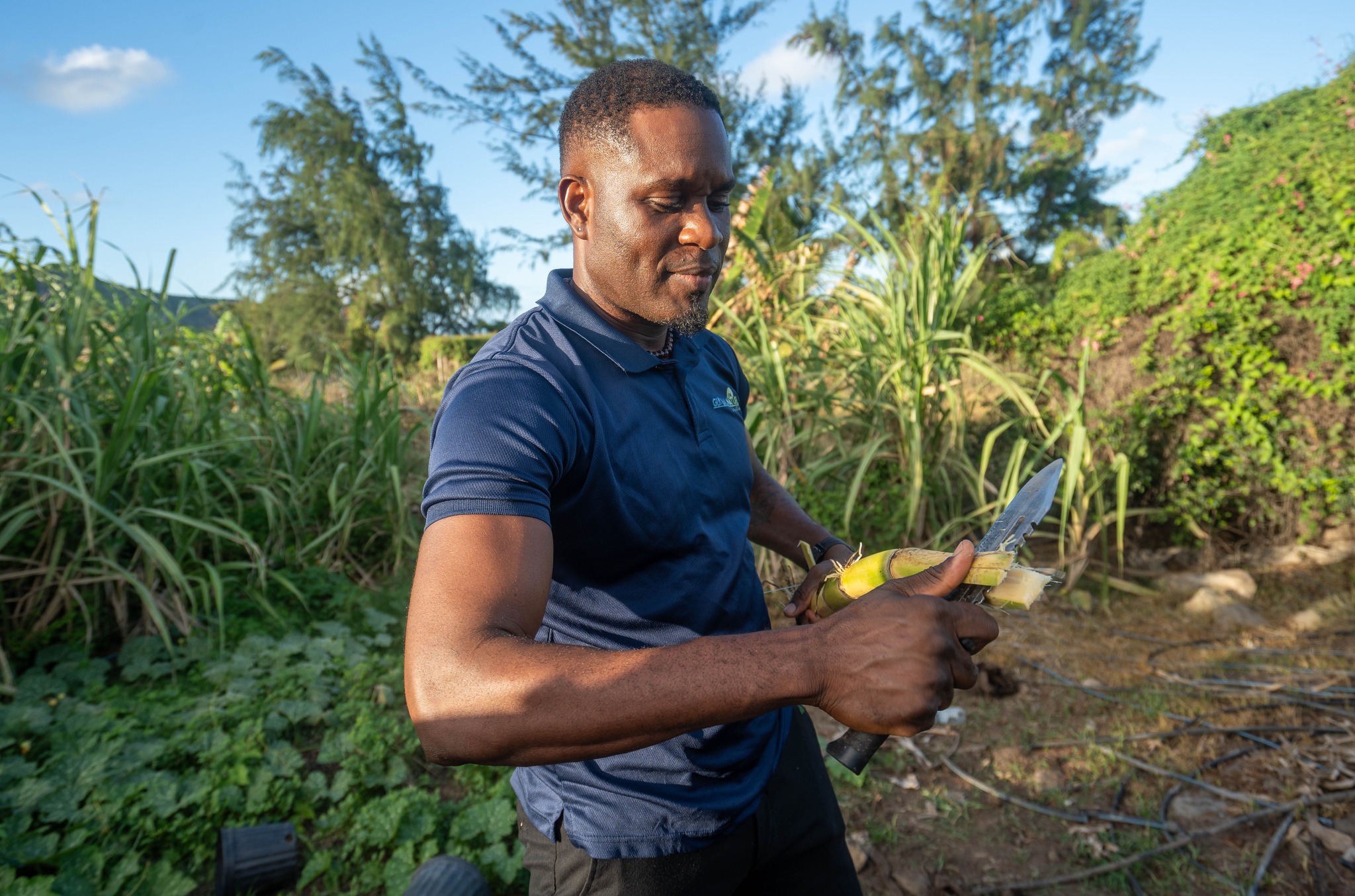
Tour guide Tony Reid cuts a piece of sugar cane from a field on Sint Eustatius. Pam LeBlanc photo
Anthony Reid seems to know everyone in Sint Eustatius. Drivers toot their car horns as they pass him. People wave. He loves to talk – about topics of real importance, not just chitchat.
We met him when he picked us up at the airport and delivered us to Golden Rock Nature and Dive Resort. But we got to know him better over the next few days, when he gave us an island tour and led us on a hiking excursion.
On our first outing, he pulled off at a sugarcane field and introduced us to a farmer, who cut off some stalks for us to chew. The sweet, juicy treat reminded my husband of growing up in Louisiana, where he gnawed on sugarcane of cane as a boy.
Later we stopped at Zeelandia Beach, where endangered green, hawksbill and leatherback turtles lay their eggs here. The St. Eustatius National Park Foundation monitors the beach during the season, which runs from March to November.
The first salute
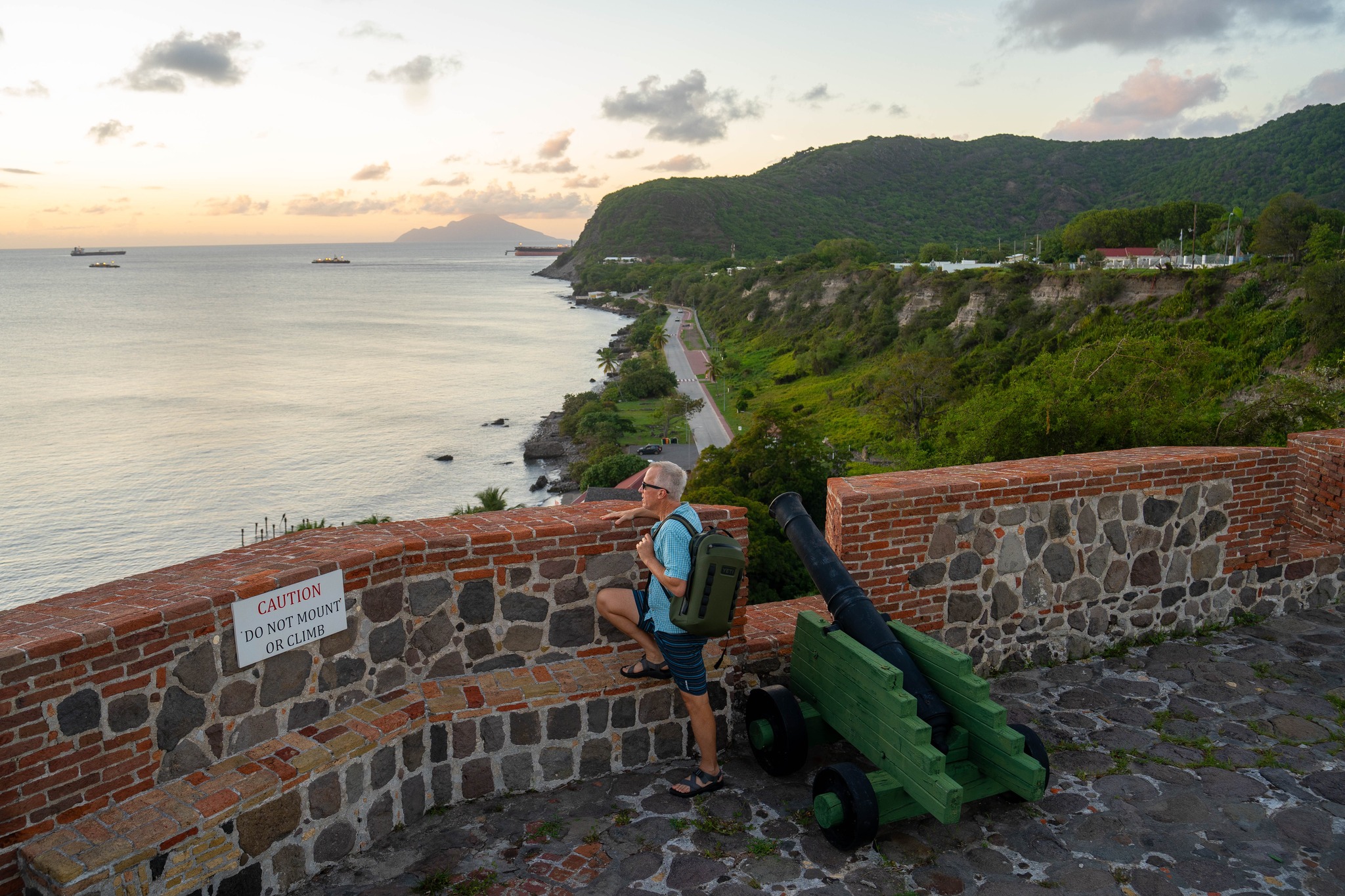
Chris LeBlanc looks over the wall of Fort Oranje on the Dutch island of Sint Eustatius in the Caribbean. Pam LeBlanc photo
Don’t miss a stop at Fort Oranje, where the famous First Salute took place.
America won its independence from Britain on July 4, 1776. But it wasn’t until four months later that another country acknowledged it.
On Nov. 16, 1776, the American brig Andrew Doria announced its arrival in Sint Eustatius by firing off 13 guns, one for each of the fledgling country’s 13 colonies. Sint Eustatius responded according to protocol – with an 11-cannon salute. The move shocked Europe.
Years later, in 1939, U.S. President Franklin D. Roosevelt honored the island with a plaque commemorating the event. A celebration is planned in November 2026 to mark the 250th anniversary of the event. Ceremonial cannon salutes, formal dinners and festivities are planned.
The town is also home to Honen Dalim, the second-oldest synagogue in the Western Hemisphere. It dates to 1738.
Scuba diving
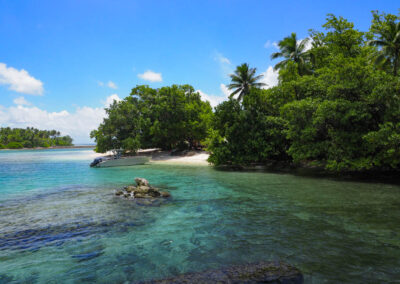
We hoped one of those blue glass beads would find us while we were scuba diving, but we had no such luck. Instead, we found a reef system vibrant with life and without signs of the stress we’ve seen in waters off other Caribbean islands.
Before you dive in, you’ll need to pay a $30 fee to the St. Eustatius National Parks Foundation for a dive tag. Statia Marine Park was established 1996 and hugs the island’s entire coast, from the shore to a depth of 30 meters. Fishing is prohibited in two reserves inside the park, and it shows in an abundance of marine life.
Three dive shops operate on the island – Scubaqua Dive Center, Golden Rock Dive Center, and Statia Divers by Golden Rock Resort, based at the resort where we were staying.
Thirty-six dive sites are located within 3 miles of the harbor, and we visited four of them over two days. I’ve never seen so many – or such big – lobsters. Besides the crustaceans, we spotted goofy-looking pufferfish, docile nurse sharks, rays, eels with their mouths gaping, oddly shaped trunkfish, and schools of other colorul residents. And at one special dive site, we found broken platters, glass bottles and other relics from shipwrecks hundreds of years old.
Hike a volcano
I’m one of those people who can’t sit still for long. Lucky for me, Sint Eustatius has two national parks, and an extensive trail system within them.
The best trail on the island leads to the rim of the Quill, one of the island’s two dormant volcanos. (The name Quill comes from the Dutch word for “pit.”) Mazinga Peak juts up from the rim at 1,972 feet, making it the second highest point in the Dutch kingdom, behind Mount Scenery on the nearby island of Saba.
It takes about two hours to make the moderately challenging out-and-back hike to the low edge of the volcano’s rim. (Before you go, purchase a $10 hiking tag from the St. Eustatius National Parks Foundation.) If you’ve still got gas in the tank, you can keep hiking to the volcano’s center. A steep and rugged trail leads down into the crater, where bromeliads and elephant ear plants give it a lush, jungle-like feel.
Watch your step if you go. The higher you hike, the more mountain crabs you’ll encounter chugging across the trail. The bright red crabs grow as big as a baseball. Keep an eye out for the native Antillean iguana, too.
Worried about an eruption? Not likely. The volcano last blew about 1,600 years ago.
If You Go

Getting there:
We flew from Austin to Miami, then on to St. Maarten. From there we took a short flight to F. D. Roosevelt Airport in Sint Eustatius. Or take the Makana Ferry. Roundtrip fare is $158, and the trip takes three hours.

Stay:
We stayed at Golden Rock Dive and Nature Resort.

Do:
Scuba dive, hike to the rim of an ancient volcano, tour the island.

Eat & Drink:
Golden Rock Dive and Nature Resort operates two restaurants – Breeze and the more casual Bobbie’s Beach Bar.

Pro Tip:
If you stay at Golden Rock, book one of the cottages – they cost less than the other room options, but we think they’re better – especially if you’re a diver. (You can spread your stuff outside to dry.) They’re separate units with an outdoor cooking and seating area.