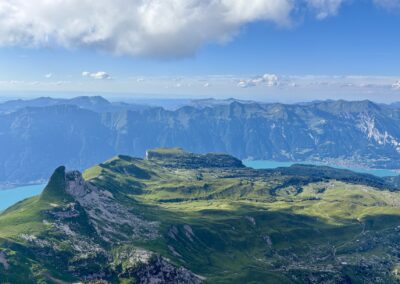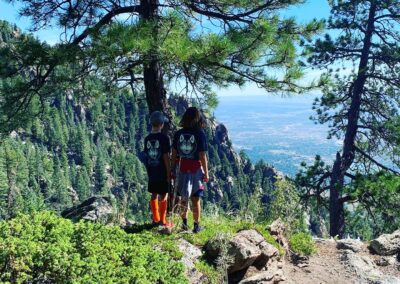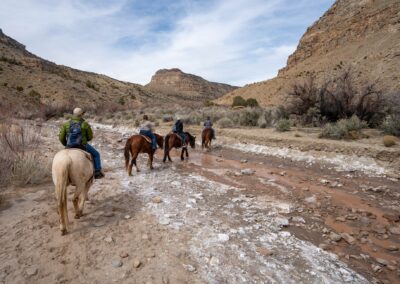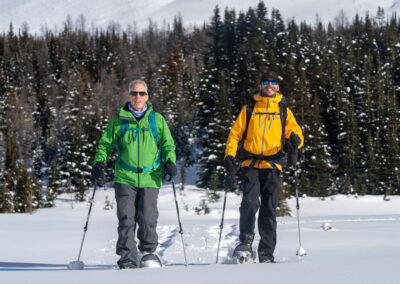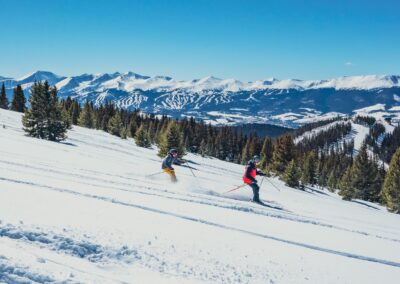


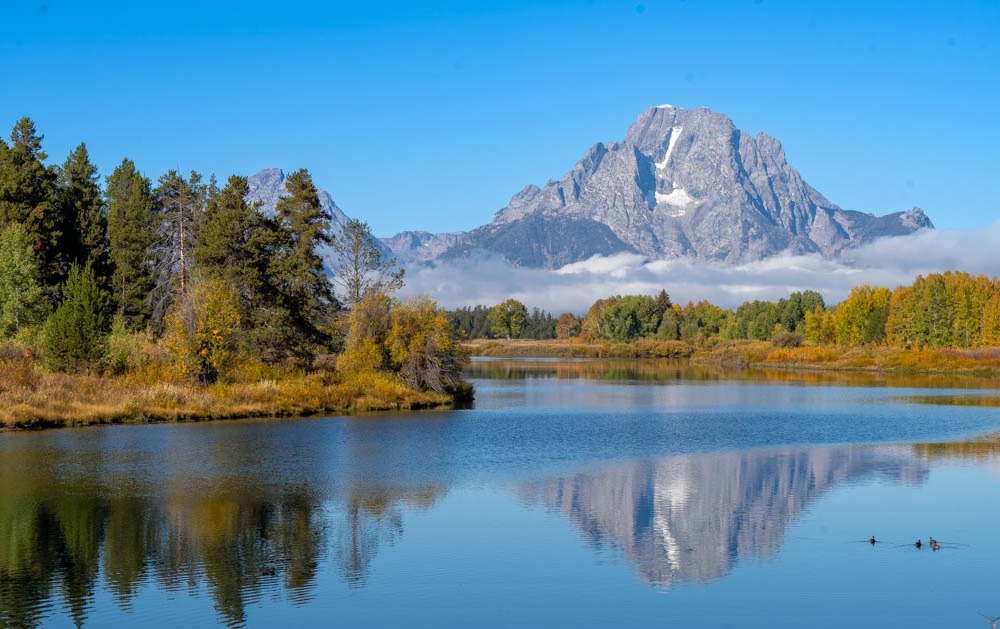
Intrepid Travel offers trips that focus on advocating for national parks, including Grand Teton National Parks, shown here. Pam LeBlanc photo
The rising sun casts a warm glow over the surrounding hills as wildlife guide Kady Leiber, bundled in a puffy, teal-colored jacket, aims a spotting scope at a ridgeline in the Lamar Valley of Yellowstone National Park.
They call this section of the 2.2-million-acre park the North American Serengeti, for the array of wildlife that roam these grassy plains and valleys. Already we’ve seen bison, a grizzly bear, pronghorn, moose and fox. This morning we’re hoping to add a wolf to our list.
National Park active-ism
I’ve come to this corner of Wyoming with Intrepid Travel, which has offered adventure heavy travel trips since 1989. The company leads trip to more than 100 countries, but this one is a first. In response to budget cuts, staffing shortages and other challenges facing national parks, the company has organized a new slate of “active-ism” trips. Each is hosted by a local outdoors guide, plus a guest activist – in our case Leah Thomas, author of “The Intersectional Environmentalist: How to Dismantle Systems of Oppression to Protect People + Planet.”
We’re a diverse and boisterous bunch. Among us is a Muslim woman, a gay man, two black women, and a Jewish woman. I’m nearly twice as old as the others, so I guess I’m holding down the been-around-the-block-more-than-once slot.
Read more: Mountains, glaciers and more on a Smithsonian Journeys trip to Patagonia

Environmental activist Leah Thomas hikes around Jenny Lake at Grand Teton National Park. Pam LeBlanc photo
In between exploring the steaming thermal pools and geysers of Yellowstone and hiking around Jenny Lake at Grand Teton National Park, we’re discussing what we can do to reconnect with nature and advocate to protect our parks. Thomas, also known as Green Girl Leah, reminds us of the importance of making sure everyone has access to them.
But for the moment, our eyes are trained on the hills. Wolves are most active at dusk and dawn, which explains why we loaded up before dawn to reach this spot on a two-lane road.
We’re not alone in our mission. Dozens of vehicles are parked along the road, with scopes trained on the nearby ridge. We’re hoping to catch a glimpse of the Junction View pack, one of nine wolf packs with a combined 110 individuals that live in the park.
Bringing back the wolves
It hasn’t always been easy to see wolves at Yellowstone. The dog-like animals, which weigh up to 150 pounds, were once hunted to near extinction here, creating a cascade of environmental issues.
As wolf numbers sank, the elk population began to boom. The growing elk population began decimating willows and aspen, which held streambanks in place. Without enough wolves keeping their numbers in check, the coyote population skyrocketed, too. That in turn put pressure on the rodent population. And because raptors now didn’t have enough rodents, they began eating newborn pronghorn.
In 1995, researchers released 14 Canadian wolves into the park, hoping a population would take root. Inside the park, wolves typically live three and a half to five years. Outside the park’s boundaries, where hunting is permitted, they live just one or two years.
“It worked way better than anyone had any reasonable expectation that it would,” says Nathan Blakeslee, who wrote “American Wolf,” a nonfiction account of one of the park’s most famous wolves. “They spread like crazy.”
The reintroduction of wolves helped restored the balance to the Yellowstone ecosystem. Aspen and willow came back, which improved stream health, which in turn gave trout and beaver populations a boost.
“It was an amazing thing,” Blakeslee says.
Even humans saw a benefit. Today, wolves are big business. One wolf pack picked a denning site just off the main road in Lamar Valley. To this day visitors using scopes can reliably spot them there.
“Grizzlies and wolves are what bring people here,” says Evan Stout, the owner of Yellowstone Wildlife Guide Company, which offers wildlife watching and photography tours year round. In 2021, he helped form a business coalition to advocate for wildlife, which brings in half a billion in tourism dollars to the area. “All our businesses depend on abundant wildlife and clean water and air.”
Scouting for wildlife
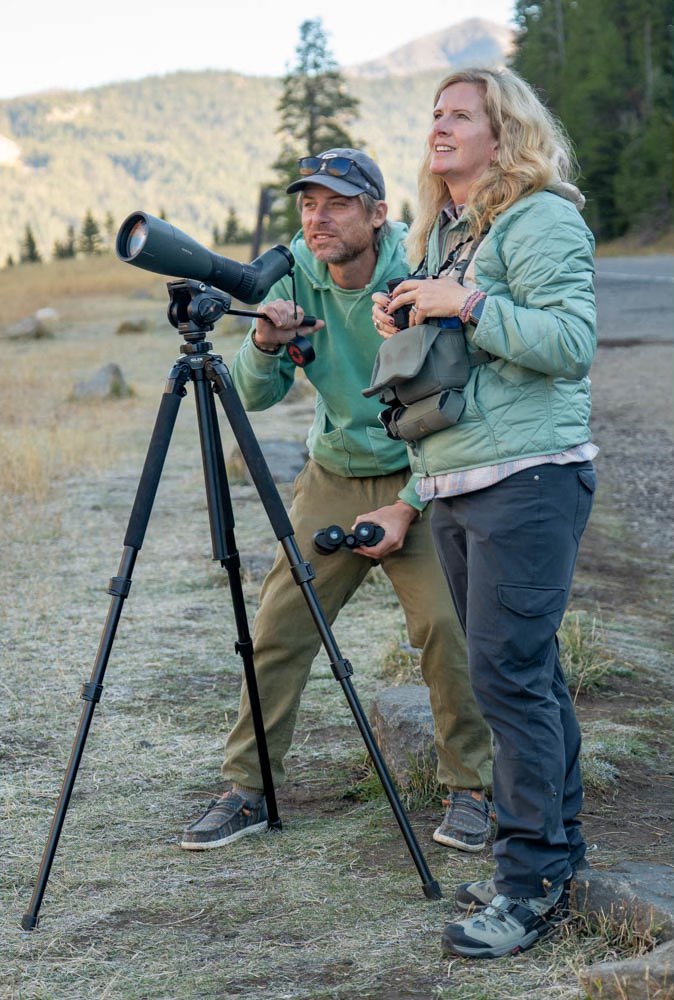
Guides scan for wolves in the Lamar Valley at Yellowstone National Park. Pam LeBlanc photo
An hour later, we’re still standing by the side of the road, hoping to see a wolf. Radios crackle with hopeful reports, but the wolves stay hidden today.
That’s OK. It gives me a reason to come back. And it reminds me of the importance of protecting our national parks. That means staying on marked trails, packing out trash, respecting park closures, and donating to non-profits like the National Parks Conservation Association and the National Park Foundation, which help fund conservation projects.
“I hope people learn to take pride in our national parks and support the incredible park rangers and staff who make them what they are,” Thomas tells me later. “I also hope people gain a deeper understanding of why nature must be accessible to everyone.”
Read more: Fredericksburg’s new Albert Hotel keeps historic charm but brings modern style
Intrepid is offering three more active-ism trips in coming months. Environmental advocate Wawa Gatheru, founder of Black Girl Environmentalist, will join a five-day trip through Zion and Grand Canyon National parks starting April 14. Climate educator Michael Mezzatesta will join a six-day active-ism trip to Yellowstone and the Grand Tetons national parks starting June 7. And Thomas will host another trip to the Yellowstone and Grand Tetons starting June 14.
If You Go

Getting there:
Fly into Jackson Hole Airport in Wyoming.

Stay:
Hotels are included. We stayed at Mountain Modern Motel in Jackson, and Ridgeline Hotel at Yellowstone in Gardiner.

Do:
Hike, look for wildlife, explore geothermal features. Intrepid will host active-ism trips to the Yellowstone/Grand Tetons and Grand Canyon/Zion in 2026. For more information go here.

Eat & Drink:
Most meals are included in the trip.

Pro Tip:
Most visitors never get more than a quarter of a mile from a trailhead. Go for a longer hike to avoid crowds and better connect with nature.