

Everyone has their happy place, and mine is and always will be St. John.
As the smallest of the three main U.S. Virgin Islands, St. John boasts the kind of unspoiled beauty that’s lacking from many of its Caribbean neighbors. Two-thirds of the tiny 20-square-mile island is designated as Virgin Islands National Park.
On St. John, you won’t find high-rise hotels on its protected beaches, nor any highways (or even a single traffic light). Here, folks drive on the left side of the narrow, switchback-riddled roads that hairpin through the hills, making frequent stops for the nonhuman residents that call St. John home –– donkeys, goats, deer, mongoose, chickens and iguanas.
St. John is not for everyone –– if you’re looking for a turnkey, all-inclusive Caribbean vacation, look elsewhere. What you will find are some of the most breathtaking beaches in the Caribbean, heart-pumping hikes, a rich history, a flourishing underwater life, and a slower, simpler pace that makes it easy to tune out the rest of the world’s noise.
To me, St. John possesses a timeless authenticity that sets it apart from many other island destinations. I first fell in love with St. John a quarter century ago on a family vacation during my senior year of college. After graduating from The University of Texas at Austin, I swapped the fluorescent lit cubical of my first professional media relations job for the Caribbean sunshine. After a short stint working at an eco-resort above Maho Bay in exchange for free housing in a canvas-and-wood tent, I got hired as the sole writer and copyeditor of the island’s only newspaper and moved into a pint-sized apartment with walls and air conditioning perched above Cruz Bay harbor.
Less than a year later, I got married on the sugar-white sands of Trunk Bay, and my husband and I lived out our carefree, kid-free 20’s working during the week and spending our weekends on beaches and boats. It was bliss.
Since moving back, we can’t ever seem to stay away for too long. St. John is still the spot we come to recharge our batteries in the Caribbean sun, swim in the clearest water on the planet, and retreat from our fast-paced life and reacclimate to “island time.”
Returning each summer with our family has brought with it whole new level of joy because we’ve gotten to watch our kids grow up making their own St. John memories year after year. Whether it’s your inaugural trip or you’re heading back again, here’s my recommendations for how to spend a perfect week on St. John that combines the island’s best beaches, hikes, historic ruins, and restaurants into one tried-and-true itinerary.
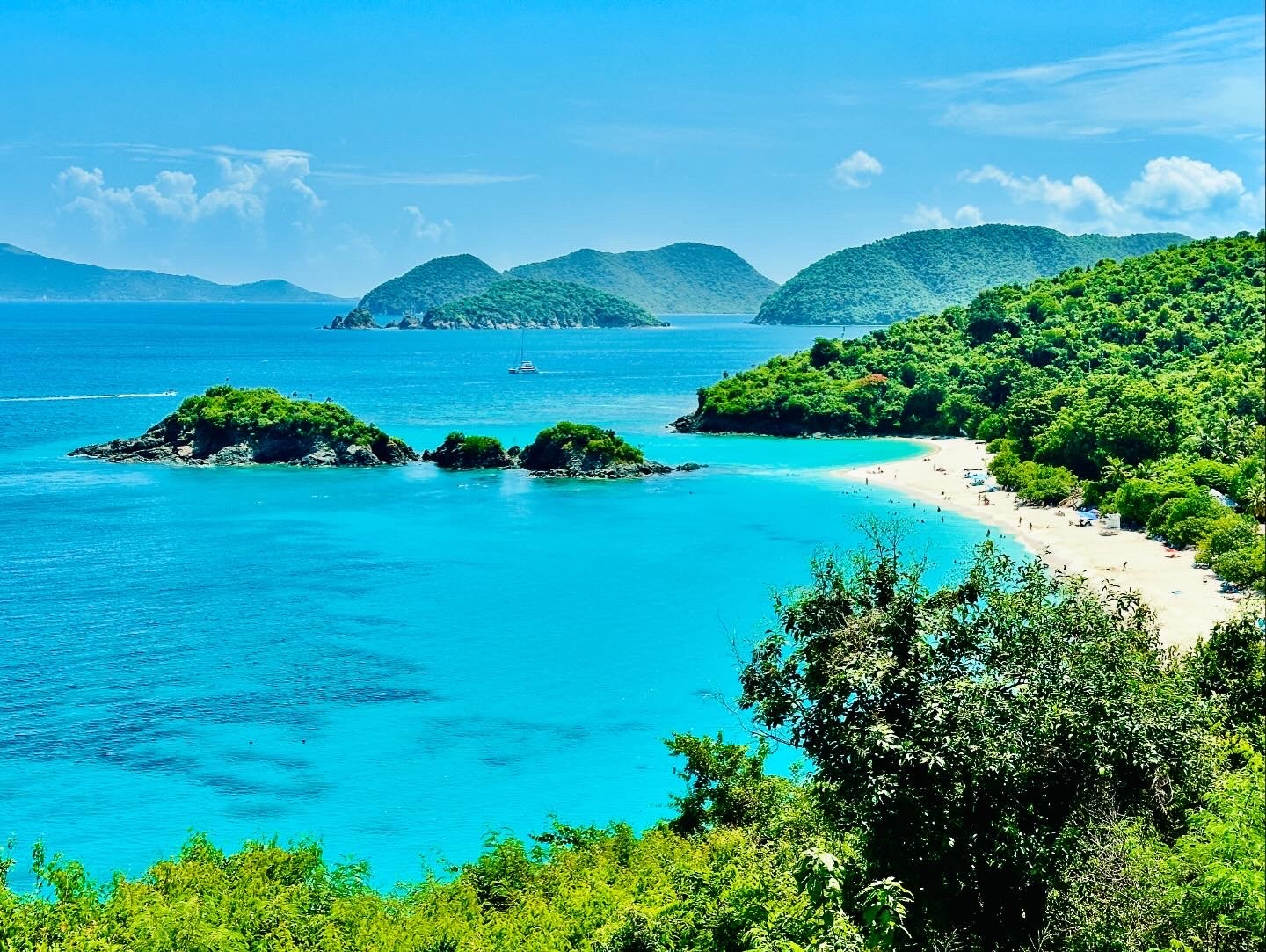
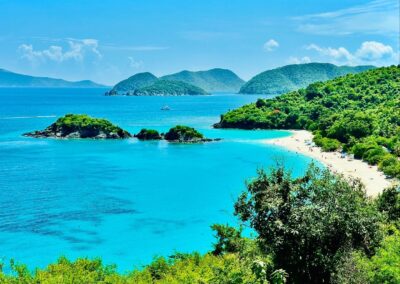
Trunk Bay has been named the number one beach in the world and it’s the most popular bay on St. John. Photo by Mauri Elbel
Day 1: Start the day at Trunk Bay, hop over to Hawksnest Bay
Trunk Bay, known for its quarter-mile strip of pillowy white sand and water so clear it could be mistaken for Mother Nature’s swimming pool, is ranked as one of the top beaches in the world and is undoubtably the most popular beach on St. John. But if you go early in the morning or late in the evening, you’ll beat the crowds and maybe even have the beach all to yourself. There’s better snorkeling to be found on St. John, but newbies can get their fins wet by exploring the underwater trail at Trunk Bay where plaques point out various marine life. It’s the only beach on St. John that charges a modest entrance fee ($5), but Trunk Bay comes with the conveniences of showers, beach and snorkel rentals, and food and drink options such as burgers, pulled pork sandwiches, painkillers and piña coladas.
You can easily spend the entire day soaking in Trunk Bay’s blinding beauty, but we like to stop off at Hawksnest Bay before heading back to town. The handsome sloping white sand beach is perfect for an afternoon beach nap or refreshing swim –– you can snorkel around several fingers of coral reefs jutting out from the shoreline.
To cap off the day, reserve a seat at La Tapa or The Terrace –– two of my favorite St. John fine dining restaurants overlooking Cruz Bay which serve chef-driven dishes and beautiful sunset views (check seasonal hours and closures).
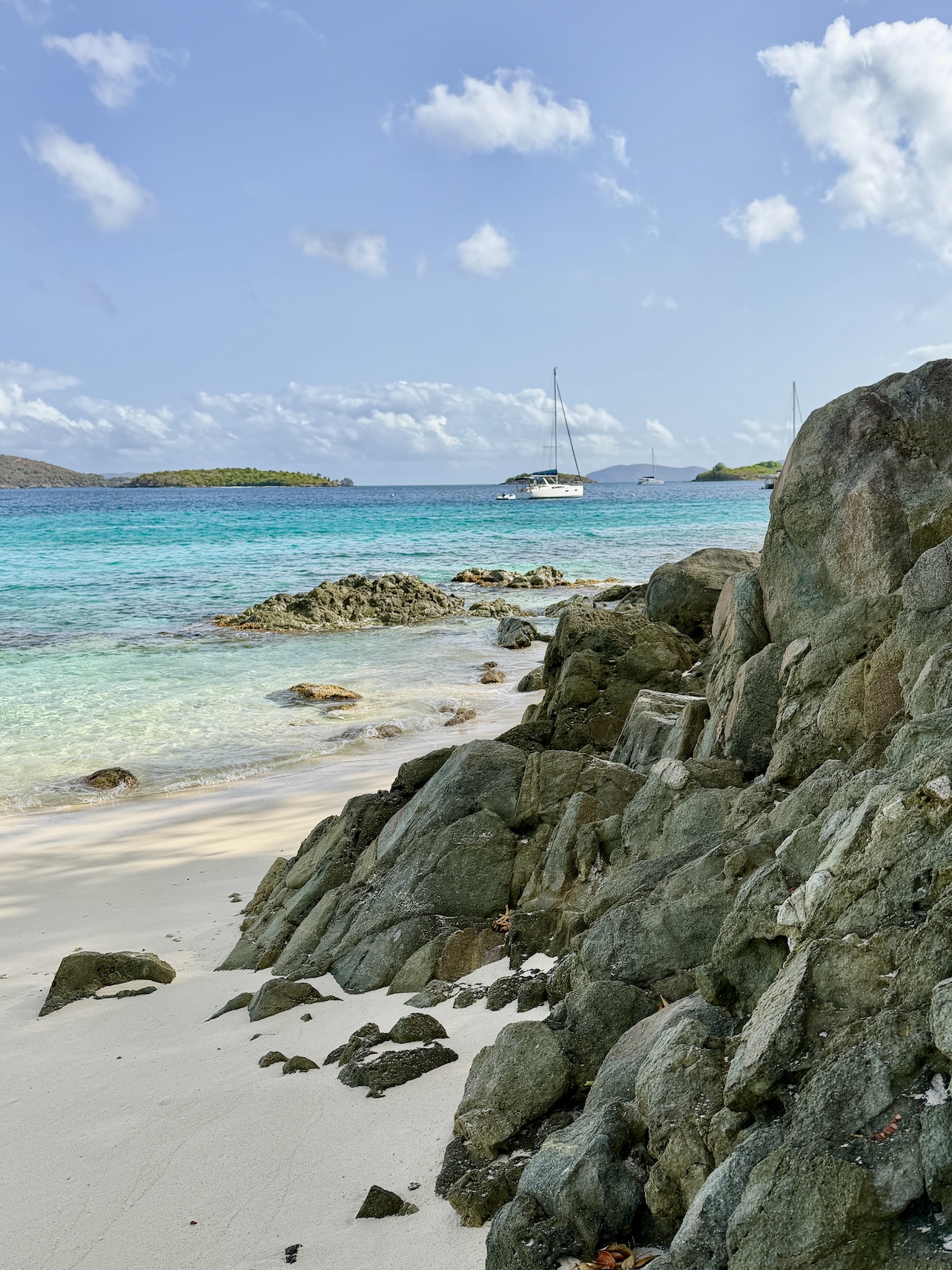
Honeymoon Beach is located within the Virgin Islands National Park and is one of the seven beaches wrapping the grounds of closed Cannel Bay Resort. Photo by Mauri Elbel
Day 2: Hike to Honeymoon Beach and Salomon Bay, refuel in Cruz Bay
If you’re looking for a short and relatively easy introductory trail that leads to one of the most beautiful beaches on St. John, hiking to stunning Honeymoon Beach via the Lind Point Trail is ideal for two reasons. One, from the trailhead at the National Park Visitor Center in Cruz Bay, it’s less than a 2-mile round trip hike, making it doable even for kids and non-hikers. And two, there’s no parking available on gorgeous Honeymoon and its sibling white-sand beach, Salomon Bay, making them less trafficked and more secluded than many other North Shore beaches. Both Honeymoon and Salomon can be accessed from the same trail, and you’ll find vibrant patch reefs inhabited by colorful fish along the rocky points fringing the beaches. We always hike to and from Honeymoon, but you can also pay for a shuttle to and from the Caneel grounds. Caneel Bay Beach Club operates beachfront concessions from Honeymoon, offering everything from frozen cocktails to bougie cabana set ups.
RELATED: St. John: A month in paradise
For a post-hike treat back in town rewarded only to non-complaining hikers, our kids love Irie Pops, located just across the road from the Cruz Bay Visitor Center. These handcrafted ice pops are made with local, organic ingredients that come in yummy island flavors like Soursop Pineapple, Passionfruit Mango and Caribbean Dreamsicle. Afterward, refuel with pizza and cold craft beer like the Juicy Booty IPA at St. John Brewers, which brews beers in small batches on the island as well as locally crafted sodas and hard seltzers. Or settle into a courtyard table at Sun Dog Café which whips out delicious dishes like sesame-encrusted ahi tuna and jerk chicken tacos from its box-sized kitchen.
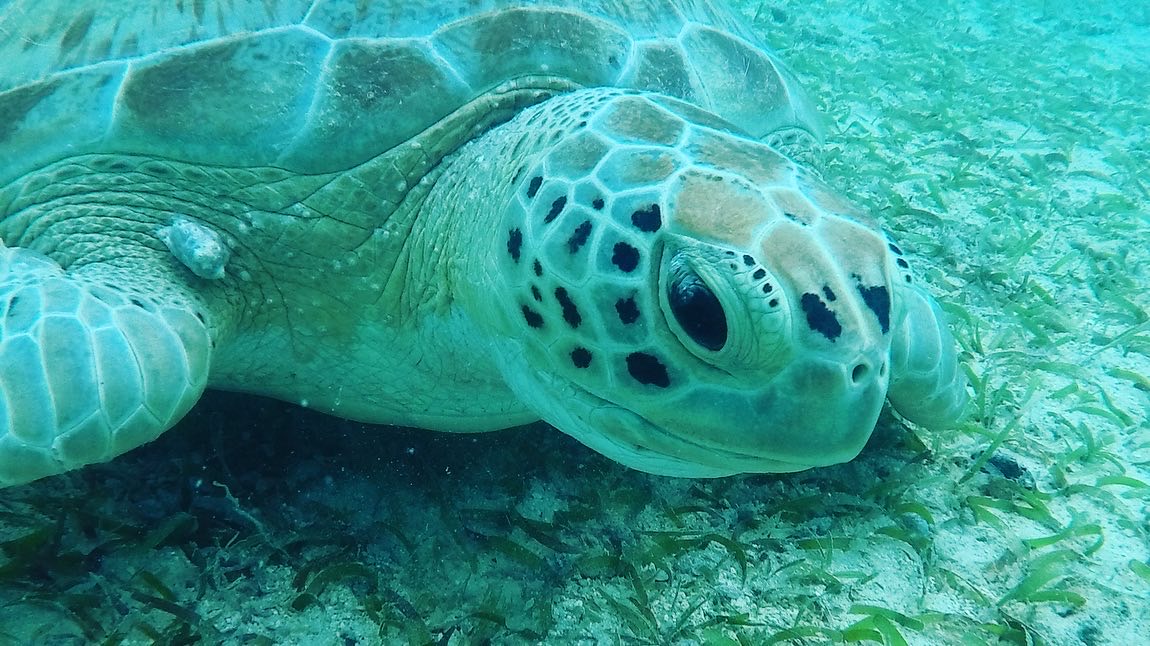
Maho Bay is home to resident green sea turtles, which live in the bay year-round to graze on the lush seagrass beds.
Day 3: See sea turtles at Maho Bay and end the day on Francis Bay
St. John is home to more beaches than you’ll be able to experience in a single trip, but the pearly white sands and clear turquoise waters found along its North Shore are arguably the most beautiful on the island, if not the entire Caribbean. We’ve always loved Maho Bay, known for its calm, shallow waters, which make it ideal for little ones and anyone wanting to park just steps from the sand.
Sea turtles can be seen swimming in various bays on St. John, but your best bet for spotting them is at Maho Bay, where lush seagrass beds provide a habitat for green sea turtles just off the shallow shoreline. Slather on your reef-safe sunscreen and pop on your snorkel gear (we prefer to pack our goggles) to observe these graceful creatures in their underwater home. Just be sure to keep plenty of distance and never touch a sea turtle (or any sea life) –– sea turtles are a protected species and anyone caught touching or disturbing one can be subject to fines and imprisonment.
I’m not a fan of the party scene that’s taken over Maho Bay in recent years, largely due to the addition of pop-up beach ventures right across the street like Maho Crossroads. But if you don’t mind the crowds, it’s an undeniably convenient spot to refuel with lunch and a cold painkiller –– a mixture of dark rum, pineapple and orange juices, cream of coconut and freshly-grated nutmeg.
When Maho Bay gets too crowded, hop back in the jeep and head to Francis Bay. This tranquil bay is as still as glass, making it ideal for swimming, sandcastle-building and snorkeling. Because Francis Bay is the last major accessible beach lining the North Shore, the vibe tends to be more peaceful than the closer beaches. Here, we usually spot a few sea turtles, schools of juvenile fish and some sting rays, but we’ve also spotted octopus and juvenile black tip reef shark swimming along the shorelines. Before heading back to Cruz Bay or Coral Bay, revisit St. John’s past by touring the nearby Annaberg Sugar Plantation Ruins, the best-preserved historical remnants of the island’s Danish colonial sugar-production era.
Day 4: Hike Reef Bay Trail, refuel at Skinny Legs
If you’re up for a more challenging hike, Reef Bay Trail is one of my favorite hikes on St. John and offers a trek rife with island beauty and history. This steep 6-mile roundtrip hike weaves through some of the island’s oldest and tallest trees and leads to ancient petroglyphs carved around 900-1500 AD by the pre-Columbian Taino and their ancestors. Just before reaching remote Reef Bay on St. John’s south shore where you can cool off mid-hike, you’ll discover the Reef Bay Sugar Mill ruins that produced brown sugar rum and molasses until 1916. Be sure to bring plenty of water and snacks and be prepared for the 900-foot elevation gain on the way up and out.
For a hearty post-hike meal, follow Centerline Road to the sleepier side of the island until you reach Skinny Legs in Coral Bay. This longstanding, laid-back restaurant boasts a true “boatie” vibe with a sailcloth that serves as the ceiling, an open-air bar that serves cold beer and strong drinks, and the best burgers and mahi-mahi sandwiches found on St. John.
Afterward, stop off for stellar sunset views, happy hour cocktails and live music at The Windmill Bar, located at Neptune’s Lookout off of Centerline Road.
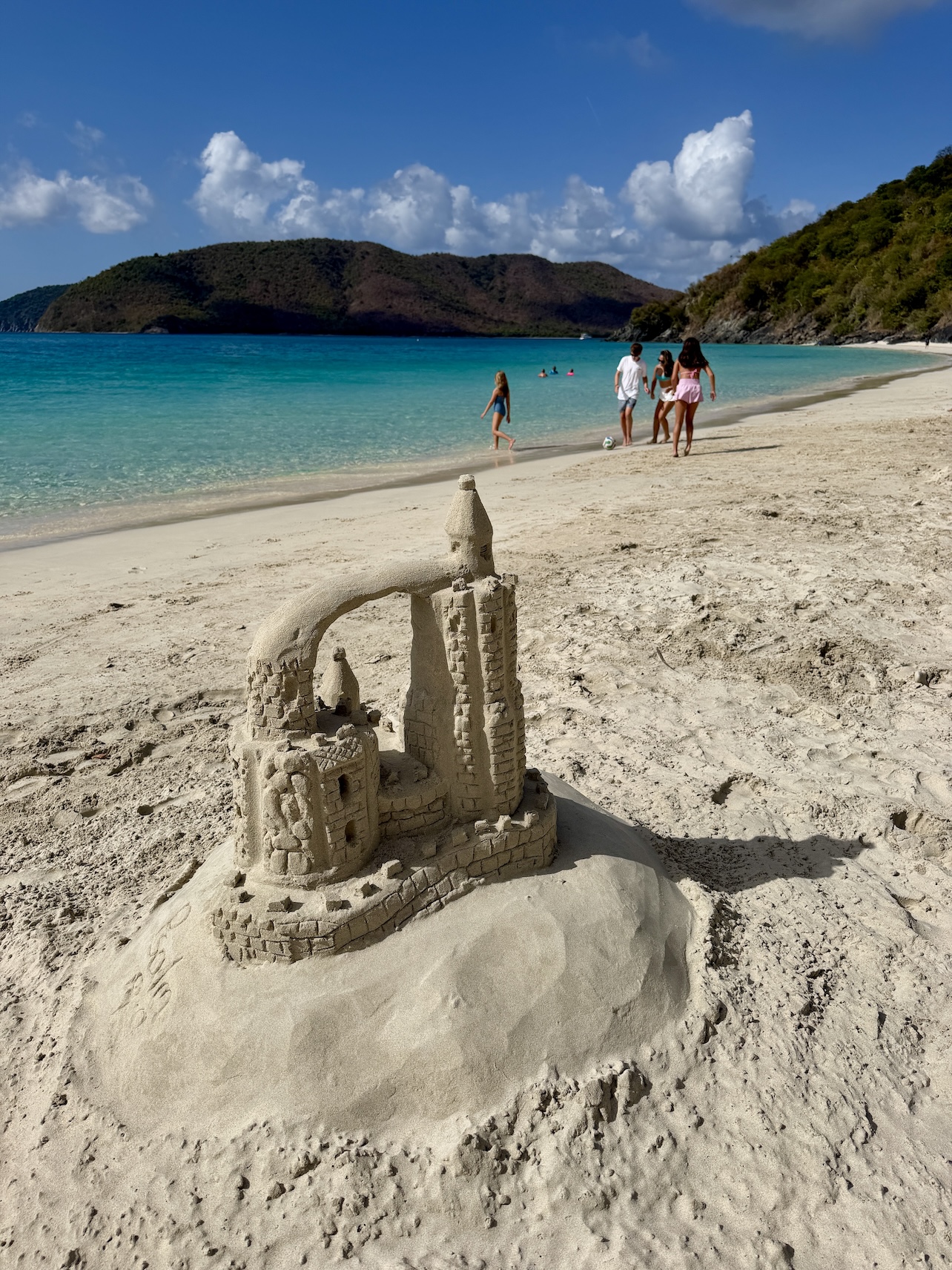
Cinnamon Bay Beach is the longest beach on St. John and is located within the Virgin Islands National Park. Photo by Mauri Elbel
Day 5: Grab a pate, hike America Hill and cool down at Cinnamon Bay
For as long as I can remember, the hearty West Indian-style, fried-to-perfection pates served from Hercule’s Pate Delight in the heart of Cruz Bay have been our family’s pre-beach-day staple. Take these tasty, traditional Caribbean pates (choose from ground beef, chicken or saltfish) and Johnny Cakes to go on your way to hiking and beaching along the North Shore and you’ll be fueled until dinner.
Twenty-plus trails weave through the V.I. National Park, and the best ones always come with complimentary cool down at a nearby beach. Explore the ruins of the historic Cinnamon Bay Sugar Plantation before setting out on the steep hike to the 19th century America Hill Great House Ruins, where efforts are rewarded with dramatic views of Maho and Francis Bays below. The uphill hike weaves through a forest shaded with towering mango, genip and guava berry trees, and it’s only about three-fourths of a mile to reach the America Hill great house (there’s a .38-mile spur off the main trail). If you want to extend your workout on your way back down, continue on the Cinnamon Bay Trail that leads to Centerline Road and back.
The best cooldown can be found at beautiful, breezy Cinnamon Bay, St. John’s longest beach. The pristine half-mile strip of powder is lapped by crystal-clear blue water and offers the perfect beach for strolling, swimming and soaking in a Sunday fun day in paradise. There are also overnight camping options spanning bare sites to eco-tents and cottages, an onsite Rain Tree Café, watersport and snorkel gear rentals and grab-and-go food and drinks.
For dinner, make a reservation at Morgan’s Mango which has been an island staple for more than 35 years. We usually time our visit with Caribbean lobster night, offered every Tuesday and Saturday when fresh lobsters are available.
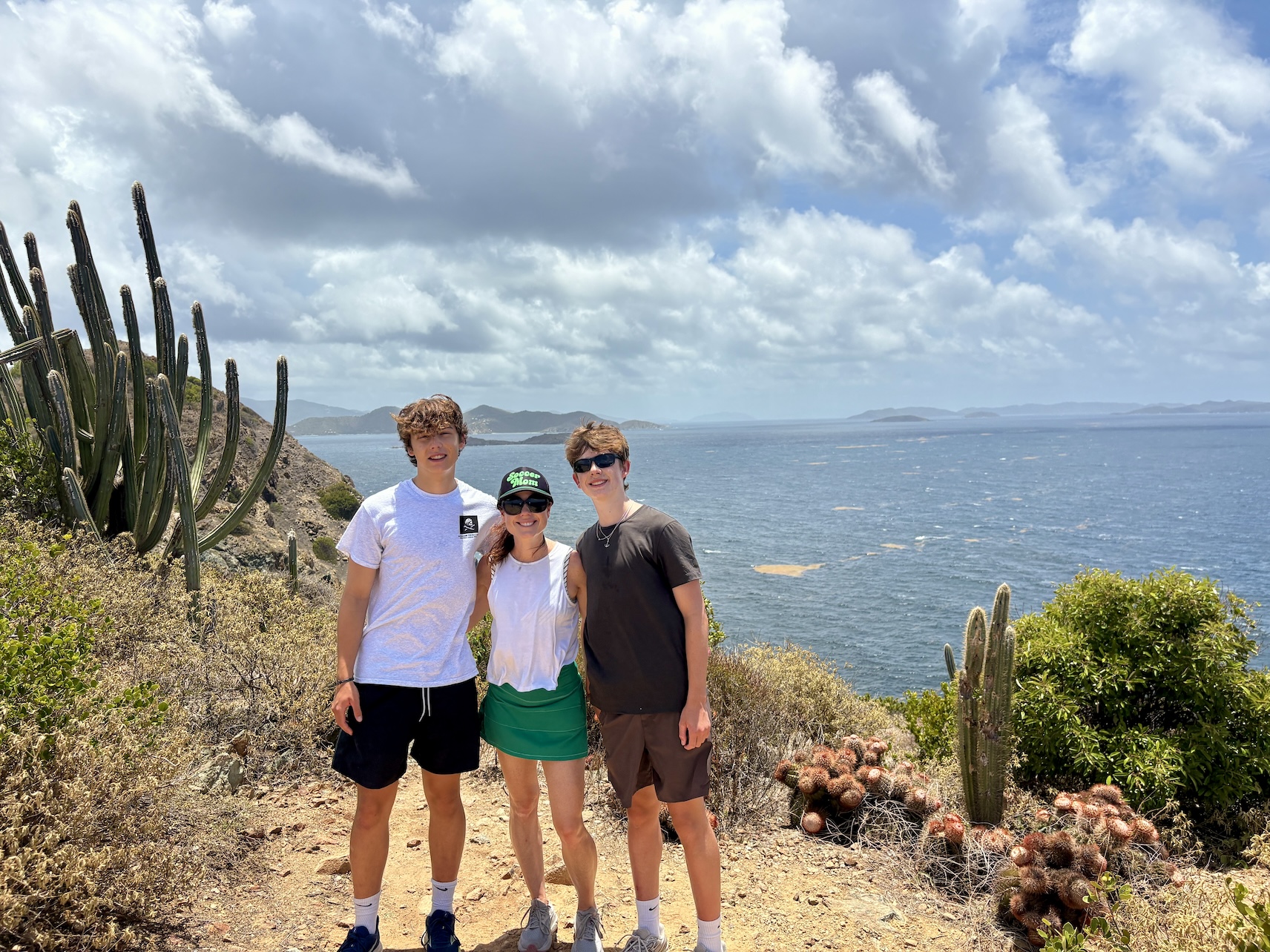
Writer Mauri Elbel hikes Ram Head on the southernmost point of the island with her sons. Photo by Travis Albrecht
Day 6: Hike Ram Head and cool off in Salt Pond Bay
It’s well worth the drive to experience the more bucolic side of the island when you start your day hiking to the summit of Ram Head –– the southernmost point on St. John. From serene and sundrenched Salt Pond Bay, the trail is just under one mile to the top. The narrow trail features steep climbs and rocky cliffs and is unshaded, so I’d recommend hiking early in the morning and bringing plenty of water. But the sweeping ocean views from the summit are worth every steep step and drop of sweat.
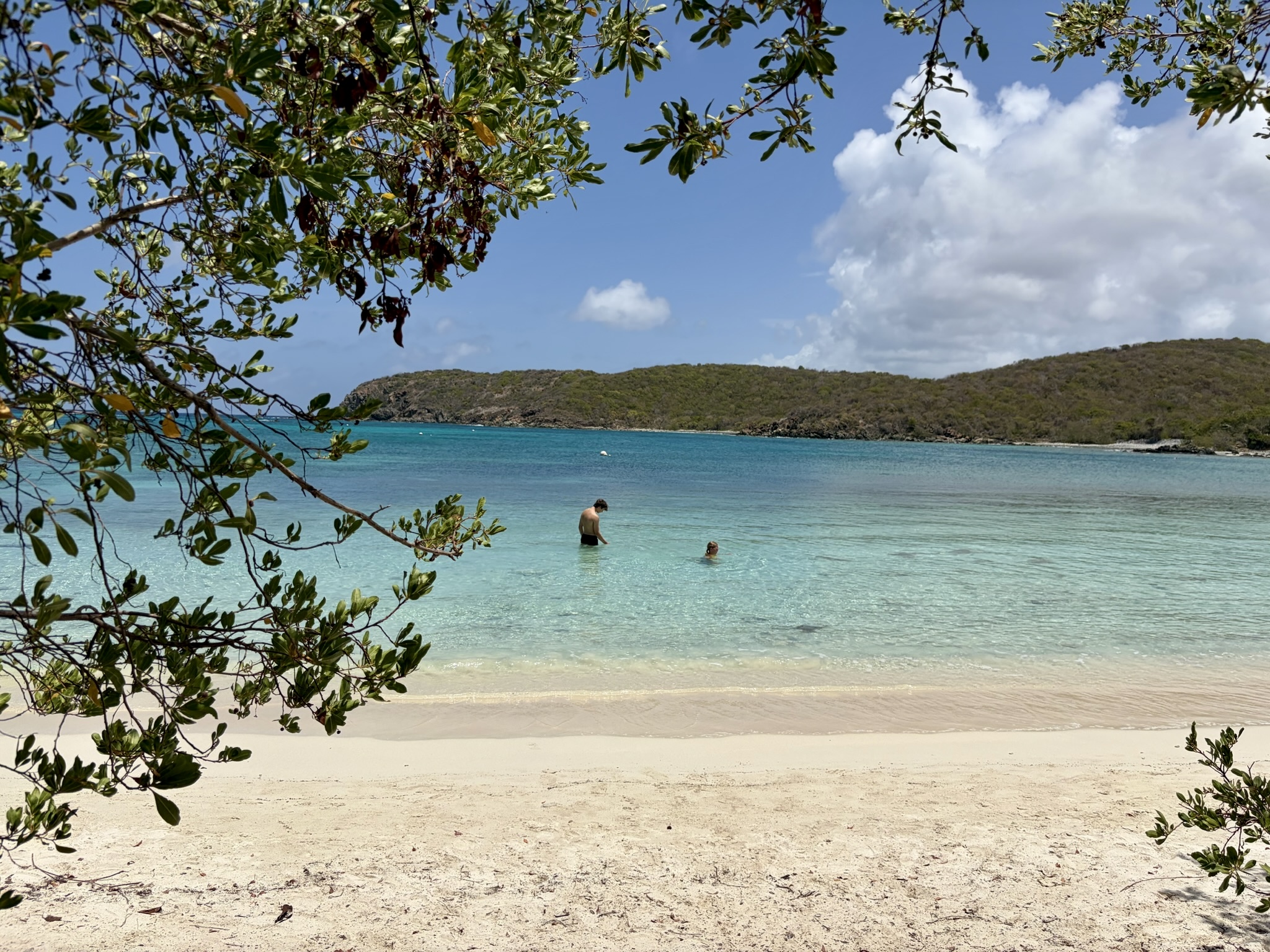
It’s always a good idea to cool off in Salt Pond Bay after hiking hot and arid Ram Head. Photo by Mauri Elbel
Afterward, cool off in the calm, clear waters of Salt Pond Bay, where you’re likely to spot sea turtles and a variety of fish. Meander past the real salt pond behind the bay until you reach windswept Drunk Bay, a cobblestone beach, where you can craft your own rock art and coral sculptures.
Afterward, sip a rum punch and refuel with conch fritters and kallaloo soup at Miss Lucy’s on Friis Bay, which operates on a seasonal and very limited schedule so call ahead.
Day 7: Rent a dinghy for a day
Too many beaches, too little time? The perfect finale to a week on St. John is to spend a fun-filled day at sea beach-hopping and snorkel-stopping along St. John’s North Shore (you don’t need a passport when you stay within the U.S. Virgin Islands, but you do if you venture to the nearby British Virgin Islands).
RELATED: A week in the British Virgin Islands aboard Barefoot Cowboy
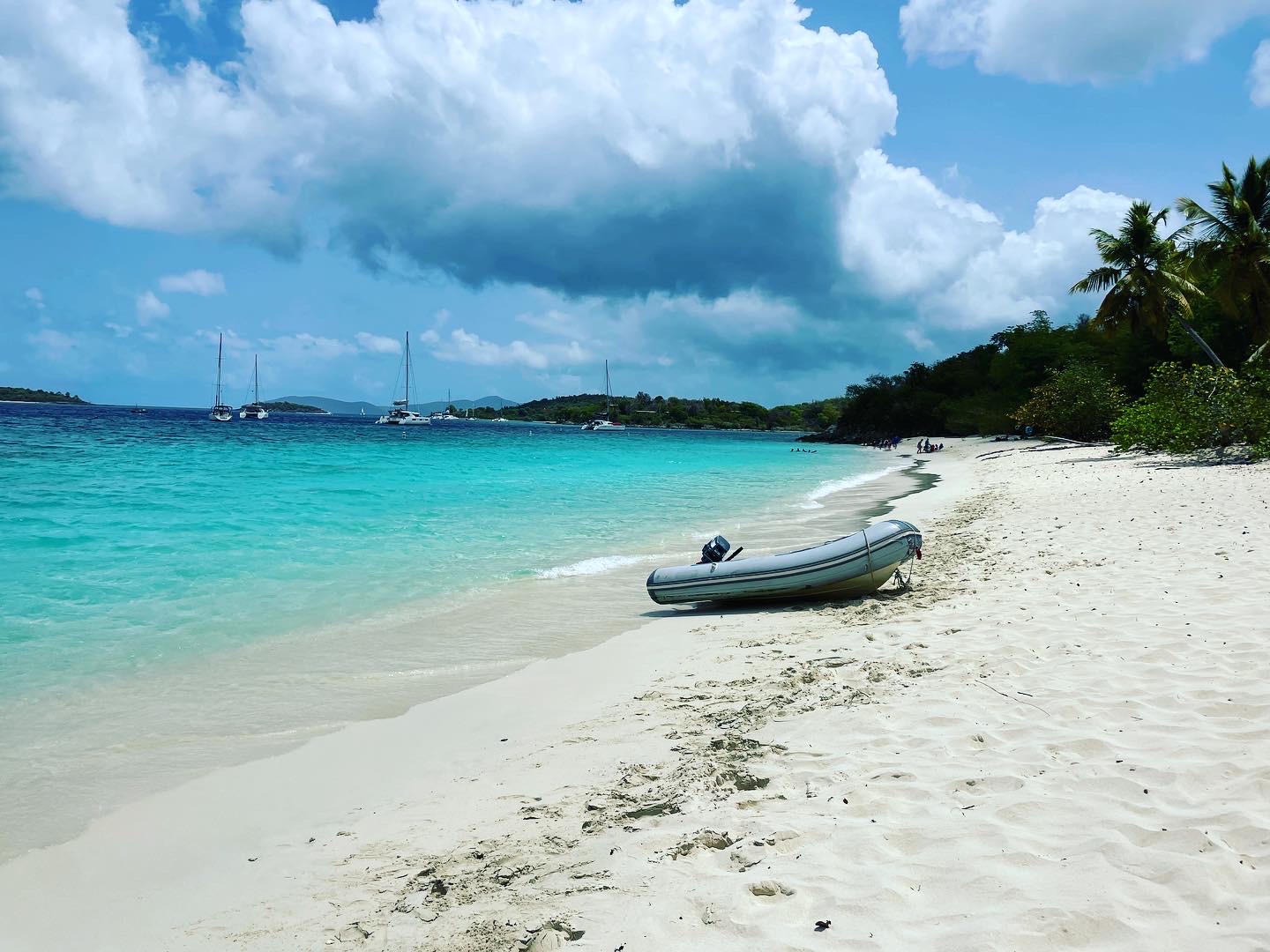
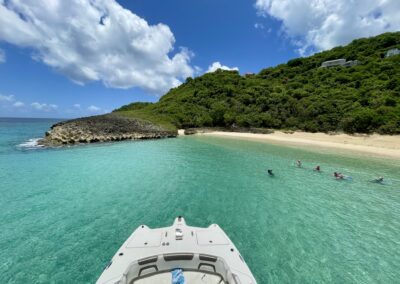
Explore St. John’s North Shore on an inflatable dinghy, which can take you to beaches only accessible by boat. Photo by Mauri Elbel
There are a handful of businesses on St. John that rent inflatable dinghies perfect for exploring the beaches along the North Shore, including Wharfside Watersports, which also offers larger 22-foot Zodiacs and a Medline 9 for more experienced captains. Renting a dingy for the day will give you access to beaches that can only be reached by boat such as spectacular Scott Beach, which we had all to ourselves one afternoon, and one of my favorites –– gorgeous Gibney Beach –– which rarely has more than a few people on it. Stop for lunch at the famous floating taco bar in Coral Bay Harbor known as Lime Out, which can only be reached by boat.
When you return to Cruz Bay a little salty after a day at sea, grab a casual dinner at Banana Deck, which serves hand-cut ribeye’s and the best conch fritters on the island, or Lovango Rum Hut for Neapolitan-style pizzas, live music and strong drinks –– we were on St. John this summer during the World Cup so we gathered here several nights for the huge sports screens.
If You Go

Getting there:
There is no airport on St. John, and traveling from Austin is a full day’s trip. Sometimes we drive to Houston, which offers direct flights to Cyril E. King airport on St. Thomas (STT). Once landing on St. Thomas, you’ll take a 45-minute taxi ride to the ferry dock in Red Hook, which offers ferry service every hour on the hour to Cruz Bay on St. John (about a 20-minute ride).

Stay:
Lodging options on St. John run the gamut from budget-friendly condos to boutique hotel rooms to luxury multi-million-dollar villas. On this past trip, we were in search of a two-night stay (most places on St. John have a 5-night minimum) before our weeklong yacht charter through the British Virgin Islands. We were pleasantly surprised by clean, comfortable and conveniently located family accommodations at Marketplace Suites. When we returned from our BVI boat charter, we rented Tennis Villa the following week, spreading out on the sprawling property that boasts lush landscaping, a pool, and the only private tennis court on St. John.

Do:
Spend the days beaching, swimming, snorkeling, scuba diving, hiking, boating and exploring historic ruins — all of which can be done without crowds in the off season when you can find reduced lodging rates and empty beaches.

Eat & Drink:
Grab a pate from Hercules Pate Delight for breakfast on your way to the beach. Refuel with burgers at Skinny Legs. Enjoy sunsets and happy hour at Windmill Bar. Indulge in Caribbean Lobster Night (Tuesdays and Saturdays) at Morgan’s Mango. Experience island fine dining at The Terrace, overlooking Cruz Bay. For authentic Caribbean cuisine, head to De’ Coal Pot in Cruz Bay, cooking up West Indian delights like curried goat, garlic herb conch, roti, mahi mahi creole and more.
Insider tip:
My favorite time of year on St. John are the off-season fall months of September and October. The crowds are non-existent, lodging is cheaper, the air is cooler, and the water is warmer. But many of the island’s restaurants are closed during the off-season months (August-October), so check hours and plan to cook more meals at home. I’d also recommend purchasing travel insurance, as it’s peak hurricane season.