

There’s no setting in the world more fitting to fall in love with Flamenco than where I’m sitting –– on the coastline of Southern Spain’s Andalusia region, where the traditional art form originated during the 18th century. My whole family is watching this Flamenco experience unfold on the stunning Mediterranean coastline, just west of Marbella, where we’ve gathered to celebrate my brother’s wedding. While most our time in Spain was steeped in wedding festivities, here are seven highlights our family discovered in the few days we spent exploring Marbella and Seville.
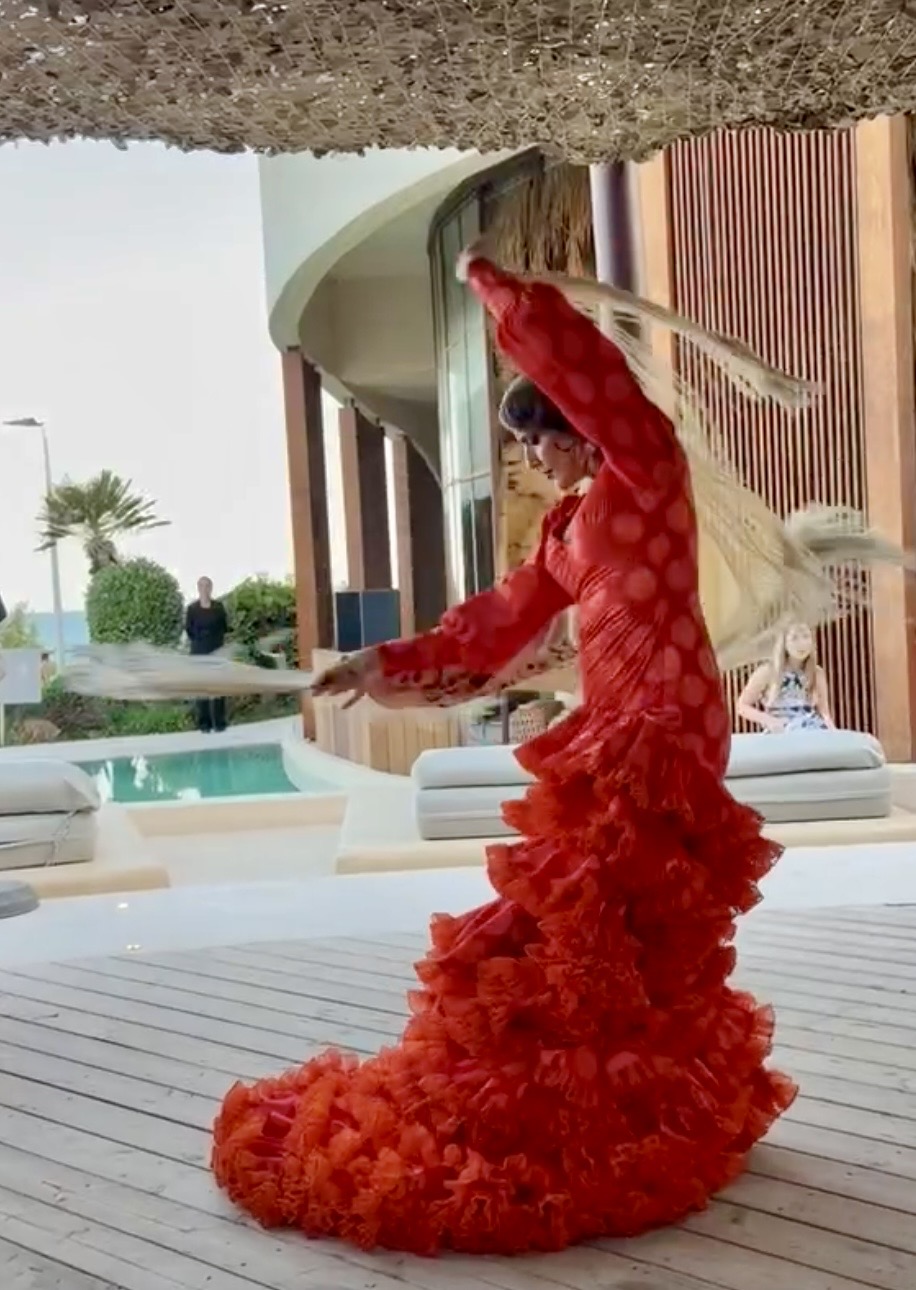
Born in Southern Spain, Flamenco is the soul of Andalusia. Photo by Mauri Elbel
1. Fall in love with Flamenco in the Andalusia region of Spain
Flamenco is rooted in the Andalusia region of Southern Spain, blending baile (dance), cante (song), toque (guitar) and jaleo (energetic vocalizations and rhythmic handclapping) to create the beloved, expressive Spanish tradition. An undeniable fabric of the Andalusian experience, you’ll find dozens of theatres (tablaos) throughout Marbella and Seville offering authentic Flamenco performances nightly.

Stroll, bike and dine on the beachfront promenades of Marbella in Spain. Photo by Travis Albrecht
2. Bask on the beaches of Marbella, Spain
Luxury is a way of life in Marbella, which drips with upscale restaurants, expensive cars, extravagant hotels and elite travelers. But beyond the bling, you’ll find tranquil coastal beauty. Marbella is a glittering gem on Spain’s Costa del Sol, boasting around 17 miles of coastline and two-dozen sun-kissed beaches perfect for strolling and biking along its waterfront promenades and dining at its beachfront restaurants. During our mid-May morning beach walks, we spotted a few people swimming, but the water was still too chilly for us. You’ll find more comfortable swimming temperatures in June through October, but droves of sun-seekers will also crowd the beaches during peak summer months.
RELATED: Exploring Switzerland’s stunning Bernese Oberland on foot
3. Wander through Old Town Marbella
We spent the better part of a day meandering the narrow, cobbled streets that weave through Marbella’s historic Old Town, known locally as casco antiguo. No agenda is needed when wandering Old Town –– simply stroll in the shadows of centuries-old, whitewashed buildings adorned with bright pink bougainvillea, duck into stylish hidden boutiques, or order tapas and sangria in the shady café courtyards around every corner. Seek out points of interest, like Plaza de los Naranjos filled with shady orange trees and wrapped by 15th-century buildings, and Moorish fortress remnants dating back to the 9th and 10th centuries.

Writer Mauri Elbel and daughter pose in front of the Torre del Oro in Sevilla, Spain. Photo by Travis Albrecht
4. Soak in Seville’s architecture and history
Everything about Seville seduces, captivating travelers with historic cathedrals, lavish palaces, and its blend of Moorish, Gothic and Renaissance architecture. As soon as we arrived in Seville, known as Sevilla in Spain, we fell in love with everything from its pedestrian-friendly vibe to the blooming jacaranda trees that paint the city in shades of violet and lavender this time of year. Walk along the Guadalquivir River, Spain’s only navigable river, which flows through the heart of the city and serves as a scenic hub for boat and kayak tours and waterfront restaurants and bars.

The Cathedral of Seville is the biggest Gothic Cathedral in the world, located in the heart of Sevilla, Spain. Photo by Travis Albrecht
Seville is home to three UNESCO sites –– the Royal Alcázar, Seville Cathedral, and the Archive of the Indies –– but there’s countless other landmarks and museums worth exploring, too. I am generally opposed to touristy horse-drawn carriage rides, especially when the weather is brutally hot. But we succumbed to our first-ever authentic carriage ride in Sevilla on a cool and breezy mid-May afternoon when our kids refused to walk another step, and it honestly saved the day. We rested our weary legs as we clip-clopped through Seville’s cobbled streets, breezing by one treasured landmark after another and winding through lush gardens for the better part of an hour, until we ended back where we started across from the famed Torre del Oro.
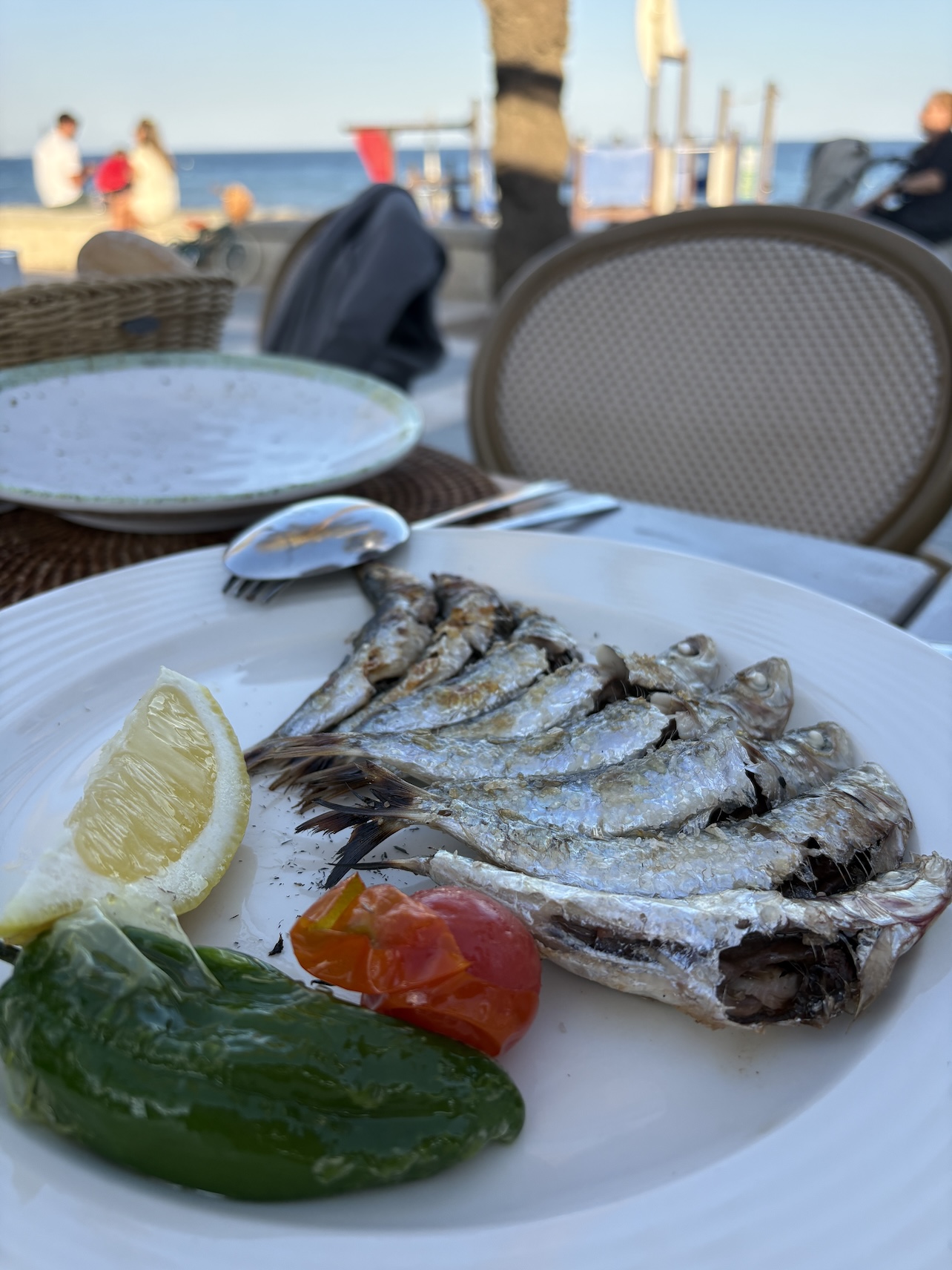
Tapas, small, shareable appetizers, are served throughout Southern Spain. Photo by Mauri Elbel
5. When in Spain, order tapas at every meal
Each and every meal we ordered during our short stint in Seville was, unapologetically, tapas. Whether dining al fresco late one night after the theatre at the restaurant tucked beneath our hotel or lunching on the elegant terrace of Ena Sevilla at the historic five-star Hotel Alfonso XIII, tapas were always our menu items of choice in Seville. Our favorites included delicate plates of jamón ibérico, made from the rare black acorn-fed Iberian pigs, boquerones fritos (anchovies), crispy patatas bravas, croquetas, aceitunas (Spanish olives), tortilla Española (Spanish omelet) and calamares fritos (lightly fried squid). Of course, tapas always pair best with traditional Spanish sangria.
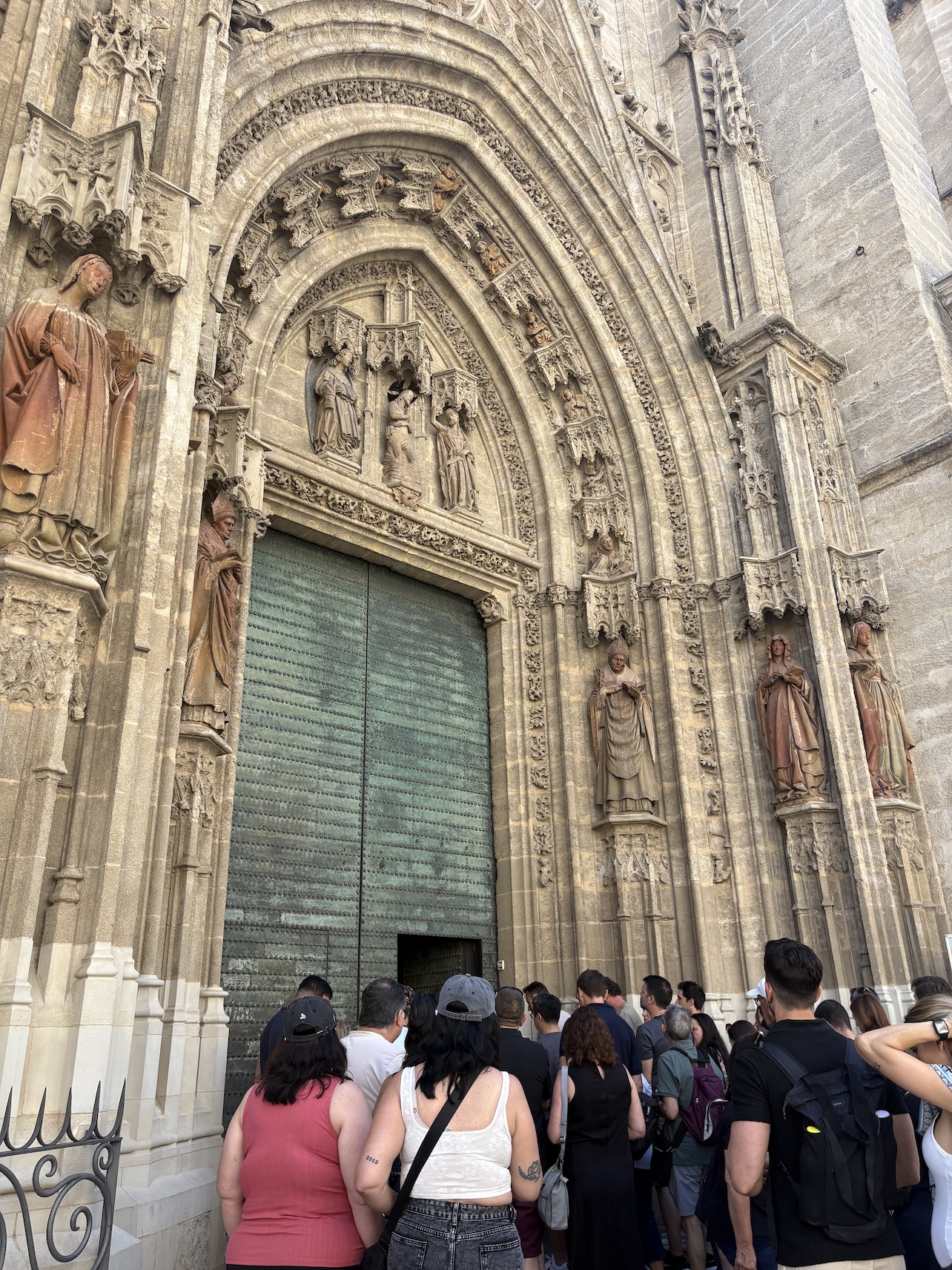
The Puerta de San Cristóbal in Seville, Spain. Photo by Travis Albrecht
6. Take in a performance at the Teatro de la Maestranza
My daughter and I walked to the Teatro de la Maestranza, just a few blocks from our hotel, to see the Paris Opera Junior Ballet take the stage. I’ve been taking my daughter, now a company dancer, to ballets since she was a toddler, and watching the Paris Opera Junior Ballet’s graceful dancers perform in Sevilla’s visually stunning opera house was the highlight of the trip for both of us. Throughout the year, Seville’s premier performing arts venue hosts everything from international ballets and flamenco performances to grand opera productions and symphonic concerts, and you can check out their calendar here.
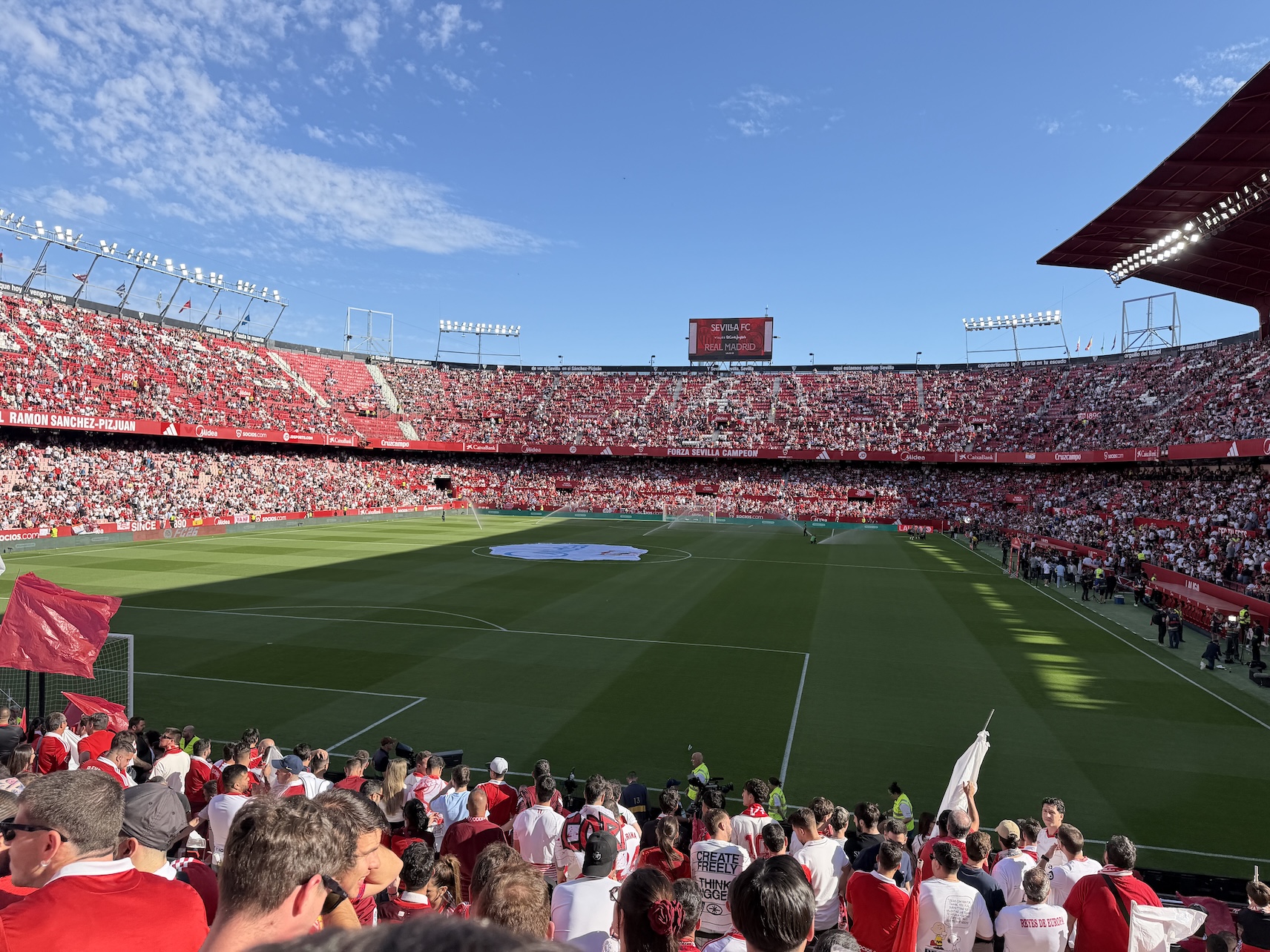
Watching Real Madrid face off against Sevilla FC at the Ramón Sánchez Pizjuán stadium in Seville, Spain. Photo by Fletcher Albrecht
7. Attend a La Liga fútbol game in Spain
While seeing a professional fútbol (soccer) game isn’t at the top of everyone’s Seville bucket list, it was actually the entire reason our family ended up in Andalusia’s sun-drenched capital in the first place. My soccer-loving son’s all-time favorite team is Real Madrid, and it just so happened they were scheduled to play Sevilla FC at the Ramón Sánchez Pizjuán stadium in Seville the day after my brother’s wedding in Marbella. We soon discovered that the Paris Opera Junior Ballet was serendipitously slated to perform the same night in Seville, giving everyone in our family big reasons to make the three-hour winding drive from Marbella. If you do catch a game, don’t be shy and find a ticket on the north end of the stadium around the Supporter’s section. You will be chanting, singing, and standing with the locals all game long.
RELATED: A day and a half in London
Thankfully, for my son, Real Madrid continued their longstanding winning streak against Seville with a 1-0 defeat, but I feel we all came out winners because we got to spend a couple of days getting to explore this incredible city.

Authentic horse-drawn carriage rides are popular throughout Seville and cost 45 Euro for a 45-minute to hour-long ride through the city.
What started as a detour to Seville to see two bucket-list experiences became one of the highlights of our entire Spain trip –– and a reminder that sometimes the most memorable travel destinations are the ones you didn’t plan.
If You Go

Getting there:

Stay:

Do:

Eat and Drink: